Slime Flux on a Tree Trunk Is Usually Not Fatal
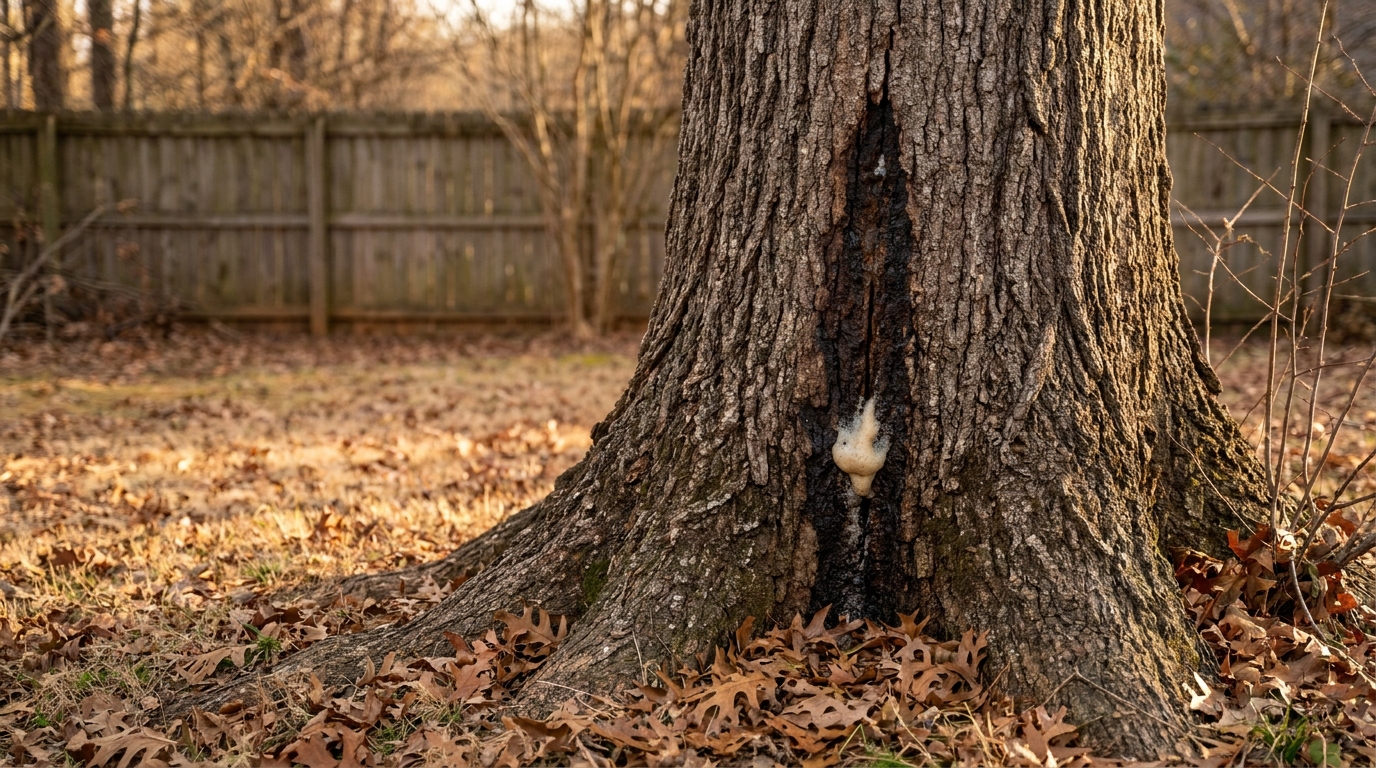
Once the leaves are gone, a dark wet streak or a patch of sour foam on an oak, elm, or maple is hard to miss. That pattern is usually slime flux on a tree trunk, the outside sign of bacterial wetwood, and extension pathologists describe it as unsightly far more often than fatal [1][3]. Gas from bacteria inside the wet wood pushes sap out through a crack or an old wound, and yeasts then ferment that sap in the open air, which is why it can foam and smell rotten [2][4]. There is no spray that cures it. The case that needs a person on site, not a product, is ooze plus a hollow, a thinning crown, or a trunk that could reach a house, a drive, or a play area if it failed [9][10].
What the streak actually is
Bacterial wetwood is a water-soaked condition in wood that is no longer growing, most often the heartwood of the trunk, and sometimes roots or branches [3]. That inner wood is darker and wetter than the wood around it [1]. On the bark, light or dark streaks start at a crack, a pruning cut, a crotch, or another wound and run downward [1][6]. Fresh liquid is slimy and often foul, sour, or rancid [1][5]. Dried flux leaves a light gray or white crust [2][4].
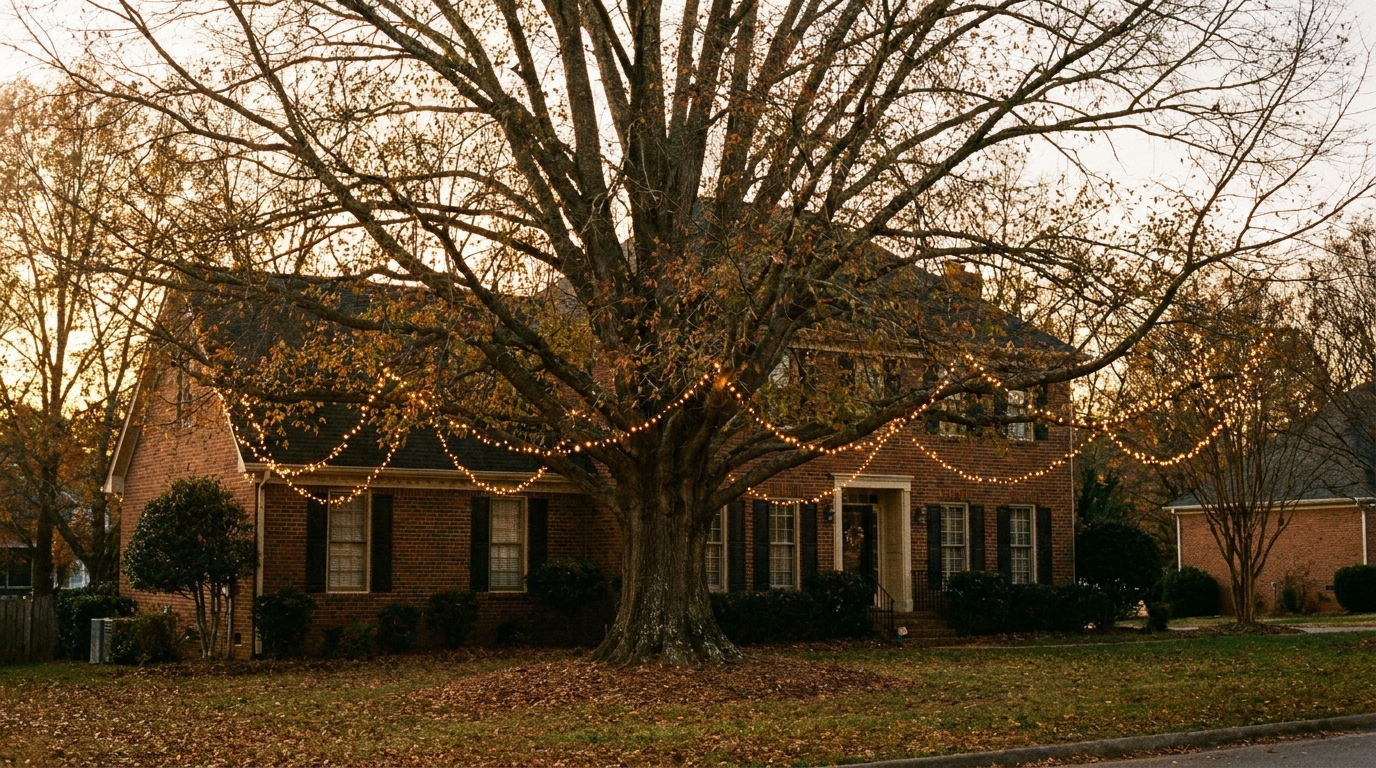
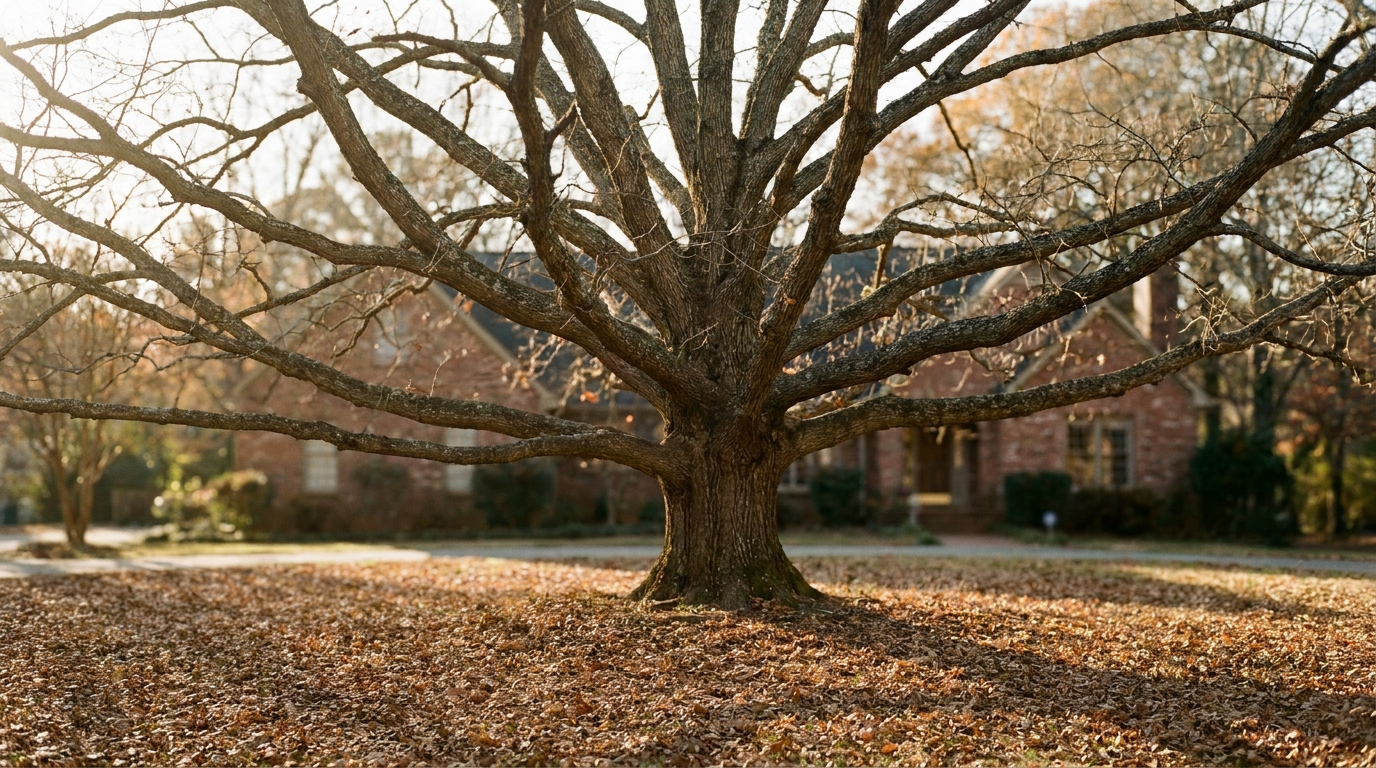
Elm and poplar show it most often. Oak, maple, and mulberry are common too, usually on trees about 10 years old or older [3][5]. Around Waxhaw, people notice it on mature yard oaks, elms, and maples once the canopy drops. Illinois Extension said the same in November 2024: bare trunks make wetwood easy to see [3].
The bacteria named in fact sheets include Clostridium, Bacillus, Enterobacter, Klebsiella, and Pseudomonas, common in soil and water [1]. They enter through wounds, including root wounds, and can live in the wood for years before the bark shows anything [2][4][6]. Colorado State notes that those bacteria are associated with wetwood, but one species has not been proved to be the whole cause [2]. What follows is clearer. Low oxygen, fermentation, and gases such as methane build pressure and force liquid out [1][2][3].
Penn State's July 2025 fact sheet reports about 60 pounds per square inch inside affected trees, against about 5 to 10 psi in wood without wetwood. Its references include a 1964 Illinois Natural History Survey circular, so treat that pressure figure as older textbook material, not a new measurement [1]. The same sheet says the wet wood raises sap pH and slows decay fungi that need oxygen [1]. Colorado State adds that the infected tissue only slightly changes wood strength in most trees [2]. A stain is not a tree rotting through.
Why the foam shows up
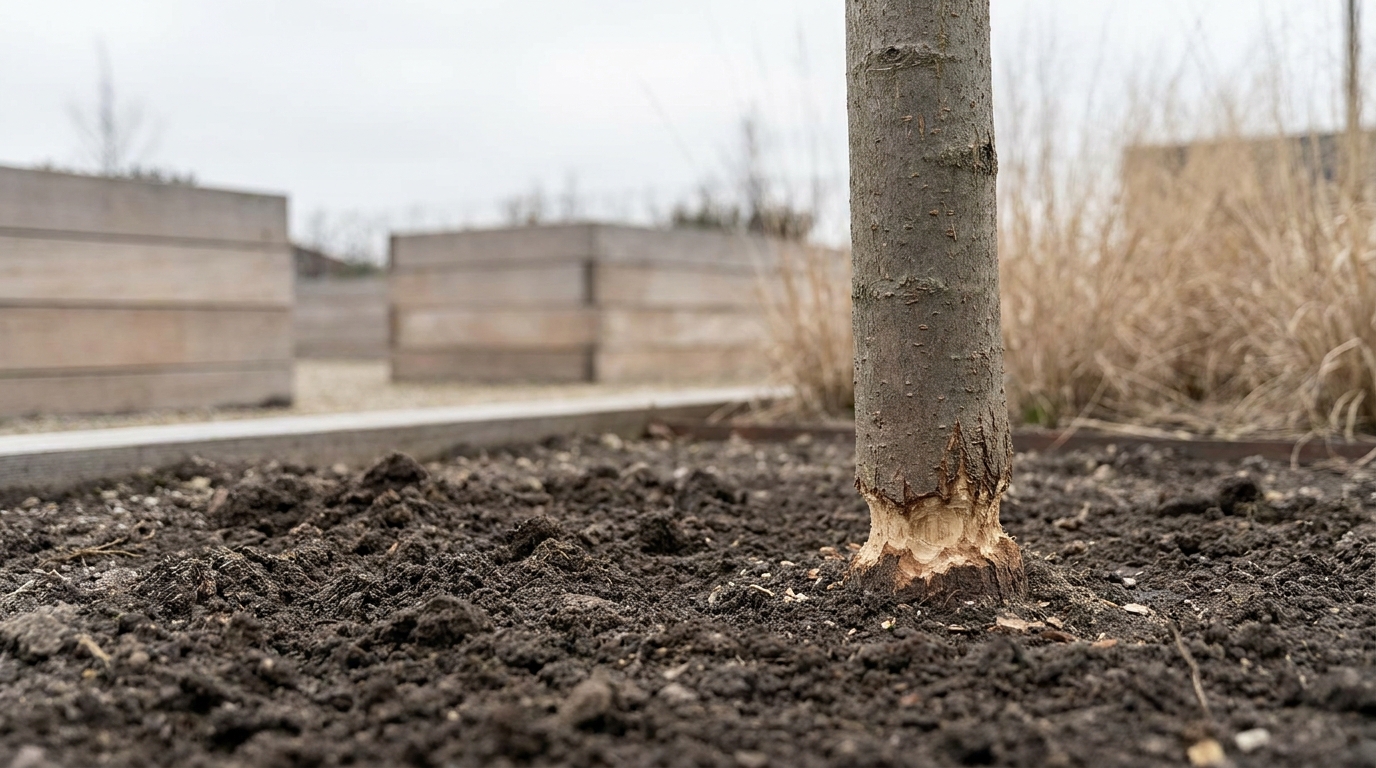
People say the trunk is bleeding. The liquid is sap and bacterial slime, and it is toxic to living bark. It can stall the callus that should close a wound, and it can kill cambium, the layer that makes new wood and bark [2][4]. Drips can also kill the grass underneath [1][2]. That brown patch is the flux, not a lawn disease moving up the trunk.
Purdue's 2020 description says the sap may leave the bark as white froth, darken as it runs, and dry to gray or white [4]. Other microbes on the wet surface sharpen the smell [4]. Flow stops and starts, and the original wound can be years old [6]. Active ooze and odor peak in summer, so a November crust is often last summer's seep, easier to see only because the leaves are down [3].
Alcohol flux, also called foamy canker, is a cousin. Colorado State describes milky froth with a sweet alcohol smell, mostly in the bark of drought-stressed cottonwoods, poplars, and willows [2]. University of California IPM draws the same line: wetwood smells sour or rancid, while foamy canker smells pleasantly fermented and is usually brief [5]. Maryland's page uses the wider words "fermented or alcoholic" for fresh slime [6]. Sour brown streaks on oak, elm, or maple fit classic slime flux on a tree trunk. Sweet white froth fits alcohol flux. Neither has a curing spray [2][5]. Flies and beetles feed on the slime but are not known to spread it, so spraying them does not help [2]. Sweet flux can draw wasps, which matters for anyone with a sting allergy [2]. A separate California problem, foamy bark canker, can kill coast live oak [5]. That is not the sour streak on landscape oaks around Waxhaw.
Not a frost crack, and not hypoxylon
A winter split is a different mark. Minnesota Extension, in a guide reviewed in 2026, describes sunscald as elongated, sunken, dried, or cracked dead bark, usually on the south or southwest side. Winter sun warms the bark, then shade or sunset cools it fast enough to kill the active tissue [8]. People often call that long split a frost crack. It is a temperature injury, not fermented sap running down the trunk. Purdue notes that freeze-injury cracks are one way bacteria get in [4]. The dry split and the sour seep can share a tree. They are not the same event.
Hypoxylon canker is a fungus, now placed in the genus Biscogniauxia. NC State Extension's 2025 publication says it sits quietly in many southern hardwoods, especially oaks, until drought, injury, or a poor site lets it invade the sapwood. Bark then falls away, leaving mats that start tan or reddish and powdery, harden black, and later turn gray [7]. Thinning, wilt, and dieback can follow, and the disease can kill the tree [7]. Slime flux stains bark that is still attached and usually spares the crown. If the bark has dropped off onto a fungal mat, do not call it wetwood.
What will not fix it
No chemical control is recommended, and nothing clears bacterial wetwood from a trunk [2][3][6]. Disinfectant, fungicide, or insecticide on the streak never reaches the wet wood. We do not sell a spray for this.
Drain tubes used to be the standard tip: drill a hole and pipe the slime off the bark. Penn State, Purdue, Illinois, Maryland, and Colorado State have dropped that advice [1][2][3][4][6]. The hole spreads bacteria, lets in oxygen, and can admit decay fungi [2][4]. Do not bore the trunk to relieve it.
Concrete or spray foam in a hollow is a separate old habit, and it does not fix ooze. Penn State's decay article, updated in November 2024, says fillers add no strength, can trap moisture, and become a hazard when the tree is cut [9]. If flux is only on a side branch, Illinois suggests removing that branch with sterilized tools [3]. On the trunk, there is little to do, and wetwood alone rarely justifies removal [3][6].
When the ooze is the smaller problem
Slime flux is chronic and, by itself, usually not fatal [3][6]. Over time it may still cut vigor and leave a tree more open to other pests [3]. If the tree is already strained, for example by soil packed under cars or foot traffic, the bacteria can move into the sapwood and bring yellow leaves, wilt, and dieback [1]. Severe cases can do that even though serious harm is uncommon, and limbs with wetwood may stay as strong as healthy wood [5].
A surface infection is harsher. Colorado State describes cambial wetwood killing the living bark and forming a canker, especially in drought [2]. If that dead bark wraps more than about 40 to 50 percent of the trunk, the tree may not close the wound [2]. That calls for a look, not a spray.
A hollow is a different problem. Decay fungi, not wetwood bacteria, empty the center. Many older trees carry decay and stay sound because they wall off damaged wood instead of healing like skin [9]. Oak and sugar maple tend to do this well. Silver maple, cottonwood, and willow more often grow new wood around a hollow center [9]. The living tissue is in the outer shell, so a hollow tree can keep a full crown for years [10]. The question is strength.
Have someone out when slime flux on a tree trunk comes with a cavity, a large old wound, or a clearly hollow trunk, and something valuable sits where the tree could fall. A 2021 USDA Forest Service form defines a hazard tree as one with a structural defect that might hit a target, meaning people or property [11]. In a Waxhaw yard that is the house, the drive, a sidewalk, or a place people sit and play. Ooze neither creates that target nor erases it.
University of Maryland's May 2023 guide says defects that could hurt people or damage property belong with a certified arborist. Its rough test: if about one-third of the interior is hollow or rotten, removal is probably safer [10]. That figure is a 2023 decision guide, not a hole to drill at home. When decay and safety are both in play, Penn State points to an ISA Certified Arborist with the Tree Risk Assessment Qualification, and it notes that decay is common in older trees that are still strong [9]. Do not climb the trunk or saw into a cavity to check. Most of that work is not safe to do yourself [10]. A dry crust and a normal crown, with no hollow over a target, can be watched [3][6]. Thinning leaves, bark off to a fungal mat, or a hollow over a used space is the visit.
Care that actually helps
Bacteria already in the trunk are staying. The useful work is fewer new wounds and less drought stress [2][3]. Mower hits, string-trimmer scars, storm breaks, bad cuts, and injection sites are common doors [4][5]. Packed soil over the roots is another stress Penn State names [1]. Colorado State links drought to worse injury and to death of the cambium, and it says trees need water in spring, summer, and winter when the soil is dry [2]. In a dry Charlotte-area stretch, water the roots deeply instead of spraying the bark.
If the tree needs a cut, wipe the tool between cuts with 70 percent ethyl alcohol or a household cleaner such as Lysol [2]. Keep any injection hole out of the wet core so bacteria are not carried outward [2][5]. Fertilizer helps only when the tree shows a real nutrient shortage [2]. A new planting may ooze simply because the roots are not supplying water yet [2]. A crust that fades and wets again in hot weather is normal, and that repeat, alone, does not prove the trunk is failing [3][6].
Practical takeaways
- Sour foam, a dark vertical streak, or a gray-white crust on oak, elm, or maple is usually slime flux from bacterial wetwood. It looks bad and usually does not mean the tree is dying [1][3].
- Fermentation inside the wood forces the sap out. Older research still quoted by Penn State in July 2025 put the pressure near 60 psi in affected wood, versus about 5 to 10 psi without wetwood [1].
- Do not spray the streak and do not install a drain tube. Drilling spreads bacteria and can let decay fungi in [2][4].
- A sunny-side winter crack is sunscald, a temperature injury. Bark that falls off to a tan, black, or gray mat is Biscogniauxia (hypoxylon) canker, which can kill a stressed oak [7][8].
- Sweet milky froth is alcohol flux. Sour brown ooze is classic slime flux. Insects on the ooze are not the cause [2][5].
- Ask for a look, not a product, when ooze comes with a hollow, dieback, dead bark around much of the trunk, or a target such as a house, drive, or play area underneath [9][10][11].
How we can help
Have more questions or want to get in touch?
If the crown is full and the only sign is a streak, watching is usually enough. When slime flux on a tree trunk shows up with a hollow, thinning branches, or a target underneath, our team can walk the property and tell you what we see. Request a free estimate on our contact page. We do not sell a spray for slime flux. If the tree needs pruning, a closer look at risk, or removal, that is the work we do out of Waxhaw.
Citations
- Penn State Extension, "Bacterial Wetwood or Slime Flux" (updated 2025-07-07)
- Colorado State University Extension, "Bacterial Wetwood" (2025)
- University of Illinois Extension, "Bacterial wetwood: symptoms, causes, and management tips" (2024-11-15)
- Purdue University Extension Forestry and Natural Resources, "Slime Flux of Trees" (2020-07-10)
- University of California Statewide IPM Program, "Wetwood, or Slime Flux" (copyright through 2026)
- University of Maryland Extension, "Tree Trunks with Wet Wood or Slime Flux" (updated 2023-02-28)
- NC State Extension, "Biscogniauxia (Hypoxylon) Canker" (published 2025-07-29, reviewed 2025-09-30)
- University of Minnesota Extension, "Protecting trees and shrubs in winter" (reviewed 2026)
- Penn State Extension, "Understanding the Spread of Decay in Trees" (updated 2024-11-10)
- University of Maryland Extension, "How Do You Decide When to Remove a Tree?" (updated 2023-05-18)
- USDA Forest Service, "Hazard Tree Evaluation Form for Developed Sites" (PDF created 2021)