Recognizing Hazardous Trees in Waxhaw, NC: Structural Warning Signs, Decay Fungi, and Risk Mitigation
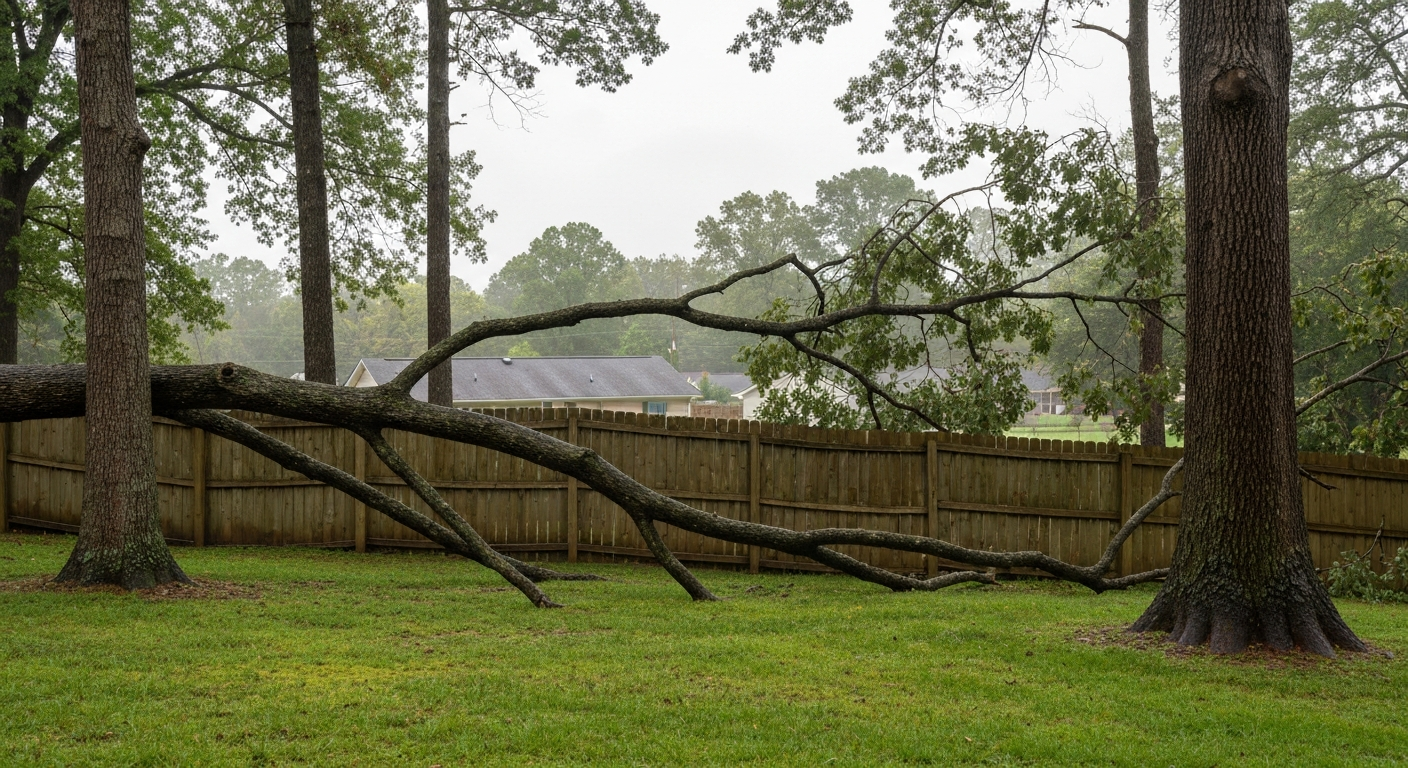
The rolling hills and mature residential neighborhoods of Waxhaw, Weddington, Marvin, and Union County, NC, are defined by their impressive tree canopies. Majestic red oaks, water oaks, loblolly pines, and sweetgums add beauty, shade, and property value to local homes. However, mature trees also face environmental stress, disease, severe weather, and aging. A tree that appears full and green from the driveway can still suffer from dangerous internal decay, root structural damage, or severe limb defects. When a compromised tree stands within striking distance of a home, driveway, deck, or power line, it transforms from a landscape asset into a significant property hazard.
Understanding when a tree poses a threat to your family and property requires knowing what warning signs to look for. Scheduling a professional hazardous tree assessment in Waxhaw, NC that home and property owners can rely on helps catch structural weaknesses early before summer storm winds or winter ice events cause catastrophic failures. Below is a comprehensive guide on identifying hazardous tree conditions, understanding wood decay, and protecting your Union County property.
What Defines a Hazardous Tree?
In professional arboriculture, a tree is not considered a hazard simply because it is large, old, or leaning. According to forestry extension standards from the University of Georgia Cooperative Extension (UGA Extension Bulletin B1031), a tree is classified as a hazard only when two distinct conditions exist together:
- A Structural Defect: Internal decay, trunk splits, dead canopy limbs, root rot, or weak branch attachments that increase the probability of tree failure.
- A Target: People, vehicles, structures, fences, play equipment, or utility lines located where a falling limb or collapsing trunk would cause injury or damage.
If a structurally defective oak stands in the middle of an isolated 50-acre forest tract with no structures or foot traffic underneath, it represents a natural ecological process rather than a hazard. But when that same tree overhangs a home on a half-acre lot in Waxhaw, immediate risk mitigation becomes essential.
Key Visual Warning Signs of Structural Tree Instability
Homeowners can perform simple visual ground checks around their property. If you spot any of the following structural red flags, a professional arborist evaluation should be scheduled promptly:
1. Trunk Cracks, Vertical Splits, and Seams
Deep vertical cracks that extend through the bark and penetrate deeply into the wood indicate severe mechanical stress. Cracks often form where codominant trunks pull apart during high winds or where past lightning strikes severed internal fibers. Cracks accompanied by oozing sap or decay fungi suggest long-standing internal instability.
2. Codominant Stems and Included Bark
Trees that split near the base or mid-trunk into two or more main stems of equal size often form a tight V-shaped crotch. As both stems grow in diameter, bark becomes trapped or included between them instead of solid wood connecting them. Included bark creates a permanent structural wedge that severely weakens the union, making codominant stems highly susceptible to splitting apart during Piedmont summer thunderstorms.
3. Root Zone Upheaval and Mound Cracking
The root system is the anchor of the entire tree. If you notice fresh mounding of soil on one side of the tree trunk, cracked soil, or exposed root lift following heavy rain, the tree may be actively uprooting. Root damage caused by recent trenching, driveway paving, utility installation, or heavy equipment movement within the root drip line severely compromises structural support.
4. Deadwood and Large Canopy Dieback
Dead limbs located high in the canopy, often referred to as hanger branches or widowmakers, are prone to breaking off unexpectedly without wind. A canopy showing widespread branch dieback, sparse foliage, or premature leaf discoloration signals severe root distress or trunk vascular blockage.
Decay Fungi and Wood-Rotting Organisms
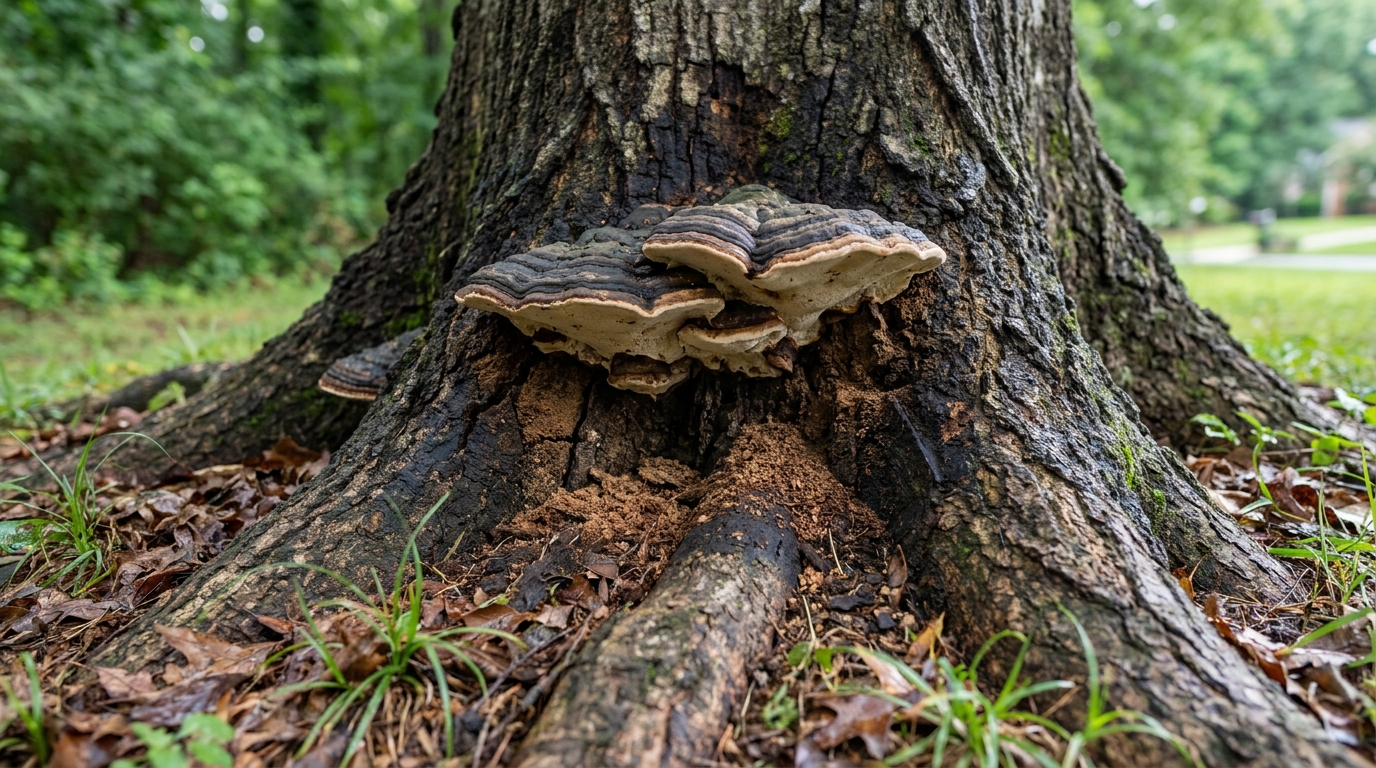
Wood decay is one of the leading hidden causes of sudden tree failure. Fungi digest the structural components of wood, lignin and cellulose, leaving trunks and root flares hollow or sponge-like inside while the outer bark looks normal.
Fungal Conks and Mushrooms at the Root Flare
The presence of shelf-like fungal conks, bracket mushrooms, or clusters of mushrooms growing directly on the trunk, main branch unions, or root flare indicates advanced internal rot. According to plant pathology guidance from Clemson University Cooperative Extension (Clemson Extension HGIC Oak Diseases), fungal pathogens such as Armillaria (shoestring root rot) and wood-decaying bracket fungi digest internal heartwood. Diagnostic signs of Armillaria include white fungal mats beneath loosened bark at the soil line. By the time mushroom fruiting bodies appear on the exterior bark, significant internal decay has already occurred.
Species Vulnerability in Union County
Certain tree species common to the Waxhaw area are particularly susceptible to rapid decay:
- Water Oaks (Quercus nigra): Water oaks grow rapidly in Piedmont soils but possess poor natural decay resistance. As water oaks reach 40 to 50 years of age, internal trunk rot and heartwood decay frequently develop, leading to sudden failure even during moderate weather.
- Mature Red Oaks: Old red oaks subject to past construction injury or soil compaction frequently develop basal rot where main roots meet the trunk.
- Loblolly Pines: Pines with severe lean, fusiform rust galls on the main trunk, or heavy bark beetle exit holes face high risk of snap failures during wind events.
Improper Landscaping Practices That Create Tree Hazards
In many cases, hazardous tree conditions are accidentally created or accelerated by improper landscaping and maintenance habits:
The Danger of Tree Topping
Topping is the indiscriminate cutting of major tree limbs back to stubs. Many homeowners mistakenly believe topping makes a tree safer. In reality, topping severely injures the tree. As explained in tree care standards from Clemson Cooperative Extension (Clemson Extension HGIC Pruning Trees) and NC State Extension General Pruning Techniques, topping removes critical foliage, starves root systems, and creates large open wounds that the tree cannot compartmentalize or heal over. Moisture enters the open stubs, causing rapid decay that spreads down into main limbs. Furthermore, the weak epicormic sprouts that emerge from topped stubs are poorly attached to decaying wood, creating future falling hazards.
Mulch Volcanoes and Deep Planting
Piling mulch high against the trunk of a tree, known as a mulch volcano, traps moisture against the bark. As detailed in planting guidelines from Clemson Cooperative Extension (Clemson Extension HGIC Planting Trees Correctly), excess soil or mulch over the root collar smothers roots, prevents essential oxygen exchange, and encourages fungal rot at the trunk base. The root flare should always remain visible above ground level.
Professional Hazardous Tree Assessment in Waxhaw, NC
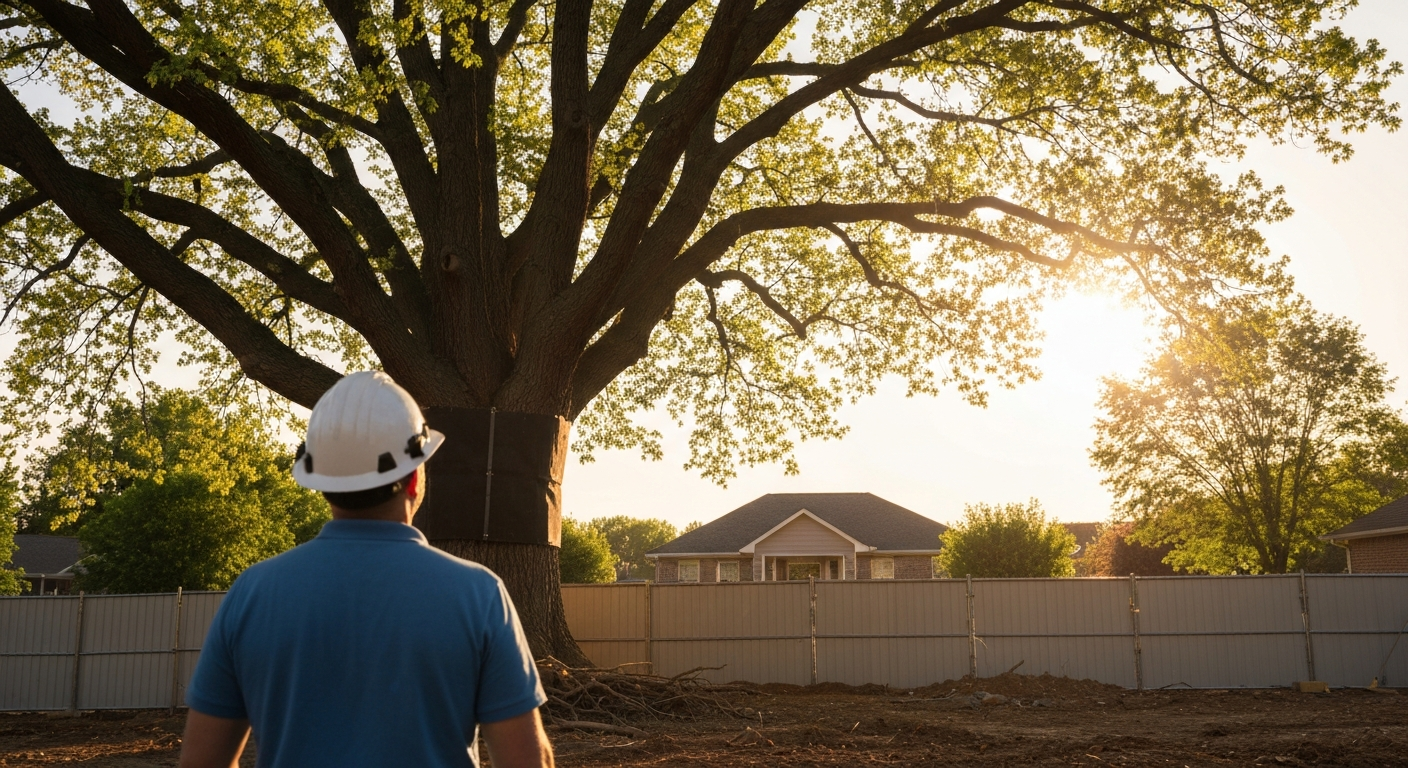
Evaluating tree risk is a specialized discipline that goes far beyond casual observation. Professional arborists utilize standardized tree risk assessment protocols to determine whether a tree can be safely preserved or requires removal:
- Visual Assessment (Level 1 and 2): A thorough 360-degree inspection of the crown, trunk, root flare, and surrounding soil conditions to identify defects, lean angle, canopy balance, and target proximity.
- Advanced Diagnostics (Level 3): When internal rot is suspected in a high-value tree, arborists may use specialized tools such as acoustic tomography or micro-resistance drilling to measure sound wood thickness without damaging the tree.
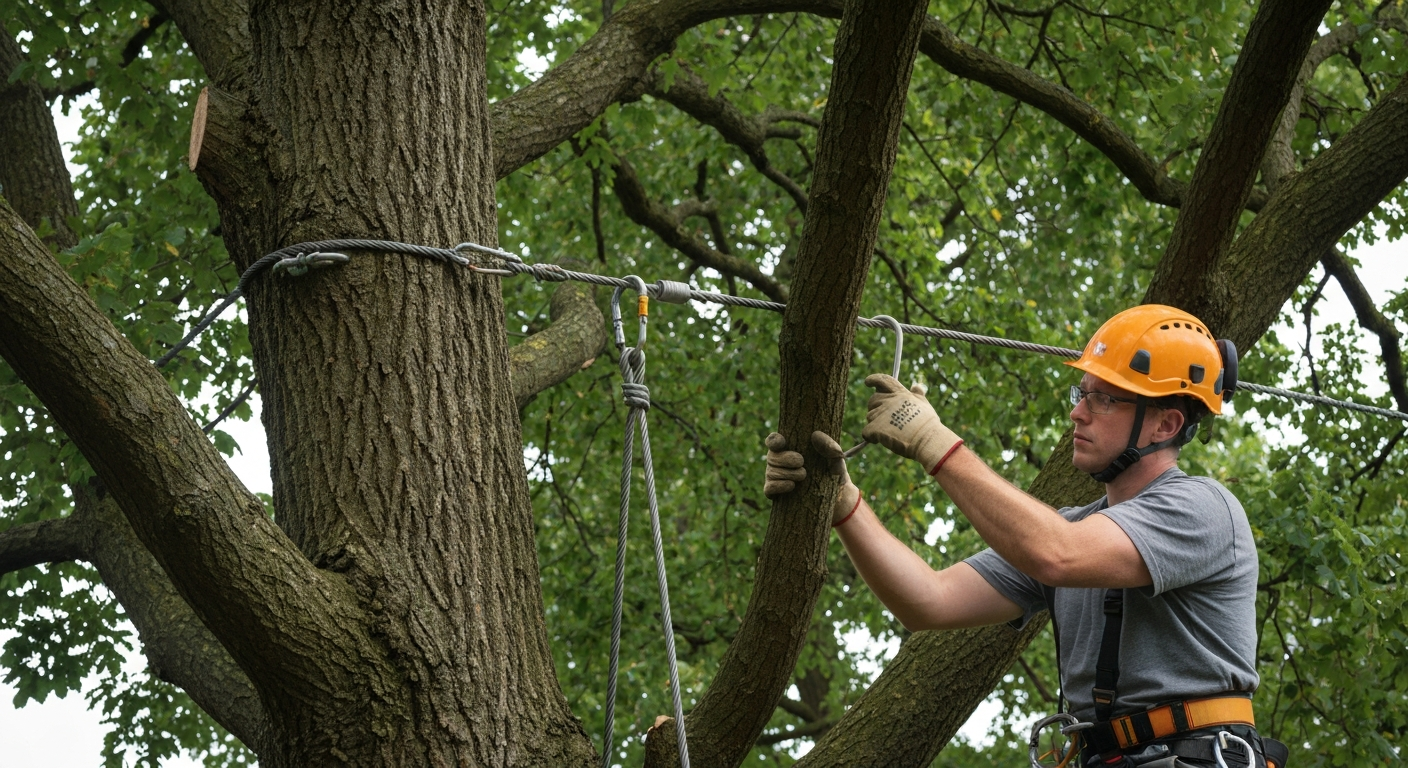
- Mitigation Options: Depending on the severity of defects, recommendations may include crown reduction pruning, deadwood removal, structural cabling and bracing to support weak branch unions, or complete sectional removal when safety cannot be guaranteed.
Why Professional Tree Service Is Essential for High-Risk Trees
Handling hazardous or damaged trees requires heavy equipment, rigging expertise, and strict adherence to industry safety standards. Homeowners should never attempt DIY tree trimming or removal on large trees or near overhead power lines. Professional arborist crews operate with comprehensive safety protocols, including full personal protective equipment (helmets, eye and ear protection, chainsaw chaps) and certified climbing harnesses and rigging ropes to lower heavy limbs safely without damaging homes or landscaping.
Protect Your Waxhaw Property with Clark's Tree Care LLC
If you suspect a tree on your property has structural defects, fungal rot, or storm damage, proactive inspection is the best protection against unexpected property loss. Clark's Tree Care LLC provides dependable, safety-conscious tree services across Waxhaw, Marvin, Weddington, Monroe, and Union County, NC.
Our experienced team specializes in comprehensive tree risk evaluation, hazardous tree removal, precision trimming and pruning, stump grinding, and 24/7 emergency tree response. We bring local expertise, plain-spoken advice, and dedicated safety standards to every job site. Contact Clark's Tree Care LLC today to schedule your on-site tree assessment and keep your property safe and beautiful.
Citations
- NC State Extension, General Pruning Techniques: https://content.ces.ncsu.edu/general-pruning-techniques
- University of Georgia Cooperative Extension, Bulletin B1031 (Shade and Street Tree Care): https://extension.uga.edu/publications/detail.html?number=B1031
- Clemson University Cooperative Extension, HGIC 2006 (Oak Diseases & Insect Pests): https://hgic.clemson.edu/factsheet/oak-diseases/
- Clemson University Cooperative Extension, HGIC 1003 (Pruning Trees): https://hgic.clemson.edu/factsheet/pruning-trees/
- Clemson University Cooperative Extension, HGIC 1001 (Planting Trees Correctly): https://hgic.clemson.edu/factsheet/planting-trees-correctly/