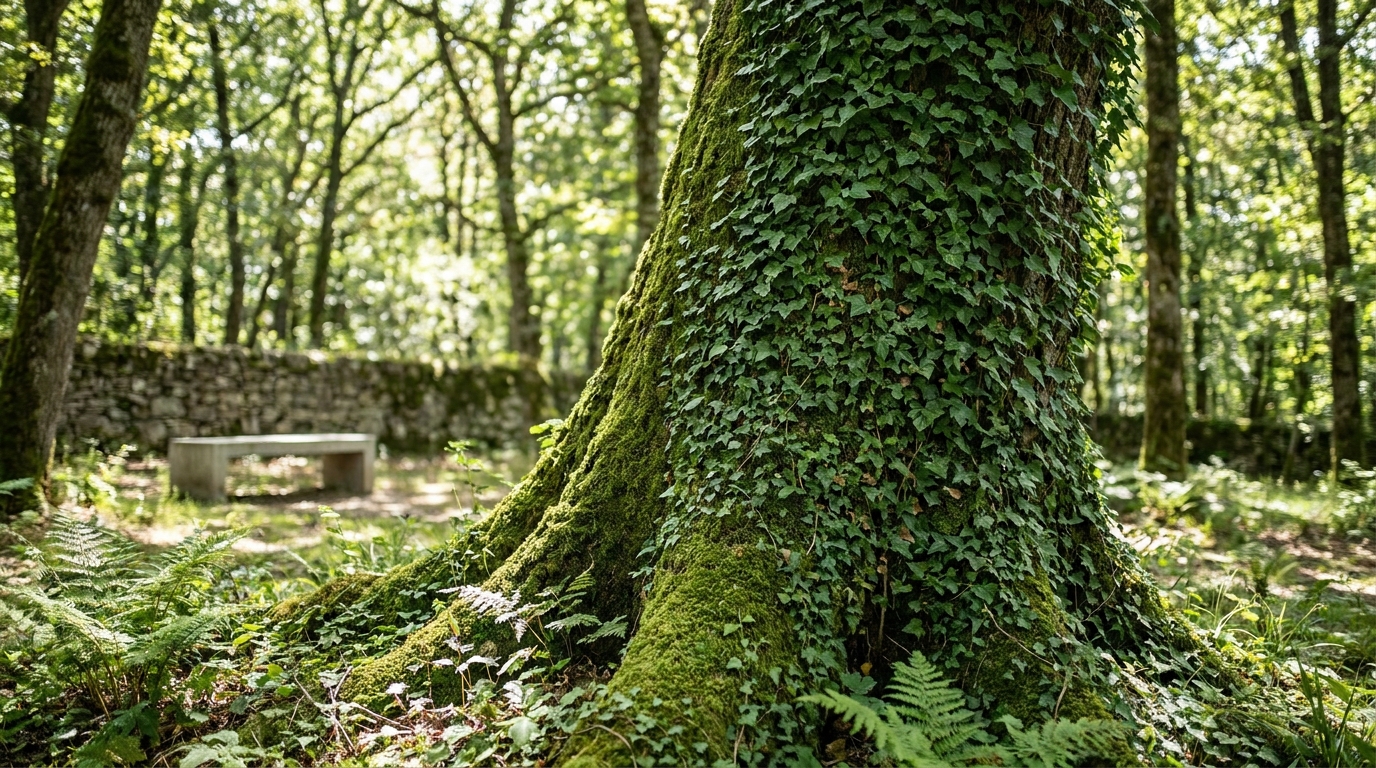
Cut English ivy on tree trunks at the base and leave the vines above to die on the bark. Do not pull them off, because that can peel bark and snap limbs.
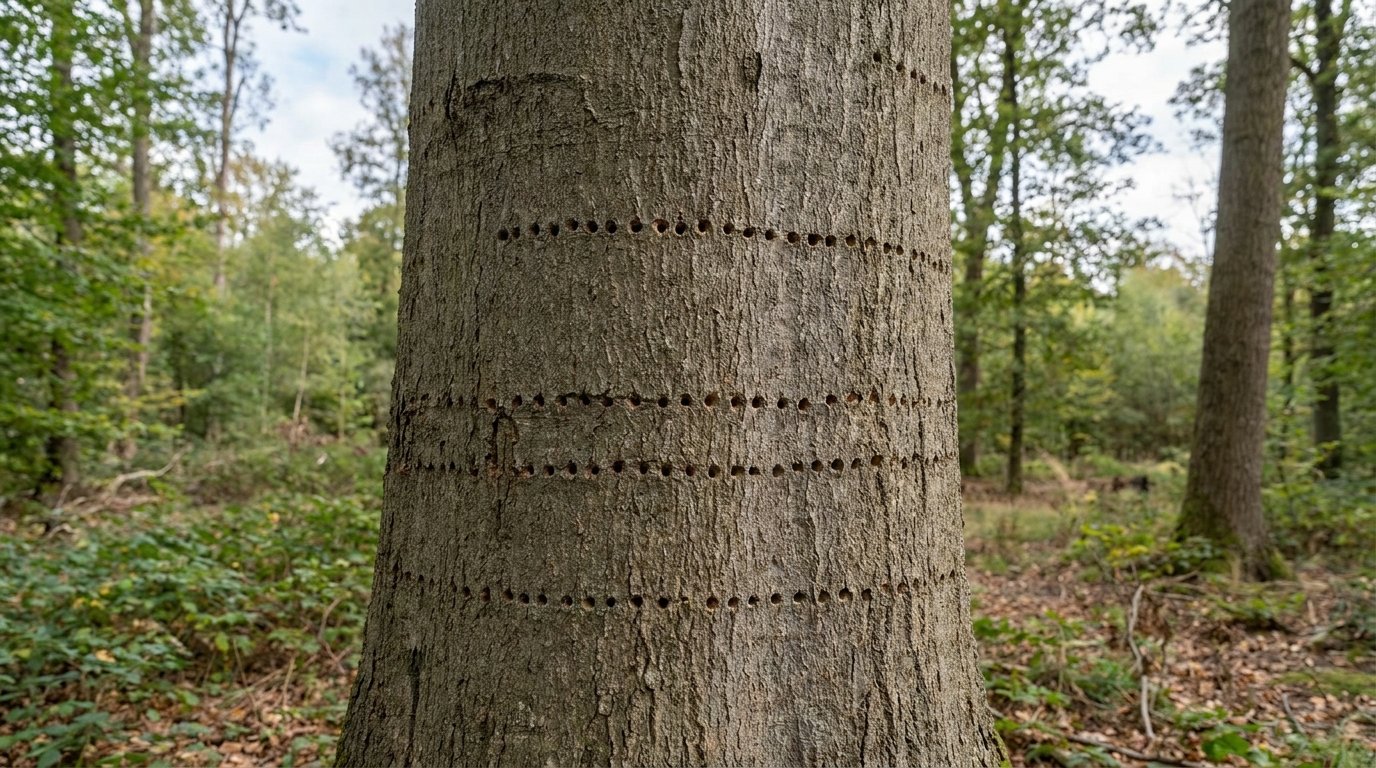
Straight rows of small holes are yellow-bellied sapsucker sap wells, not bark beetles. Most trees tolerate light feeding, while pitch tubes, boring dust, or D-shaped exits point to insects.
Southern magnolias often drop their oldest interior leaves in October while the outer crown stays green, and that pile is usually normal. Brown new growth, scorched margins, or dead limbs are the signs that need a closer look.
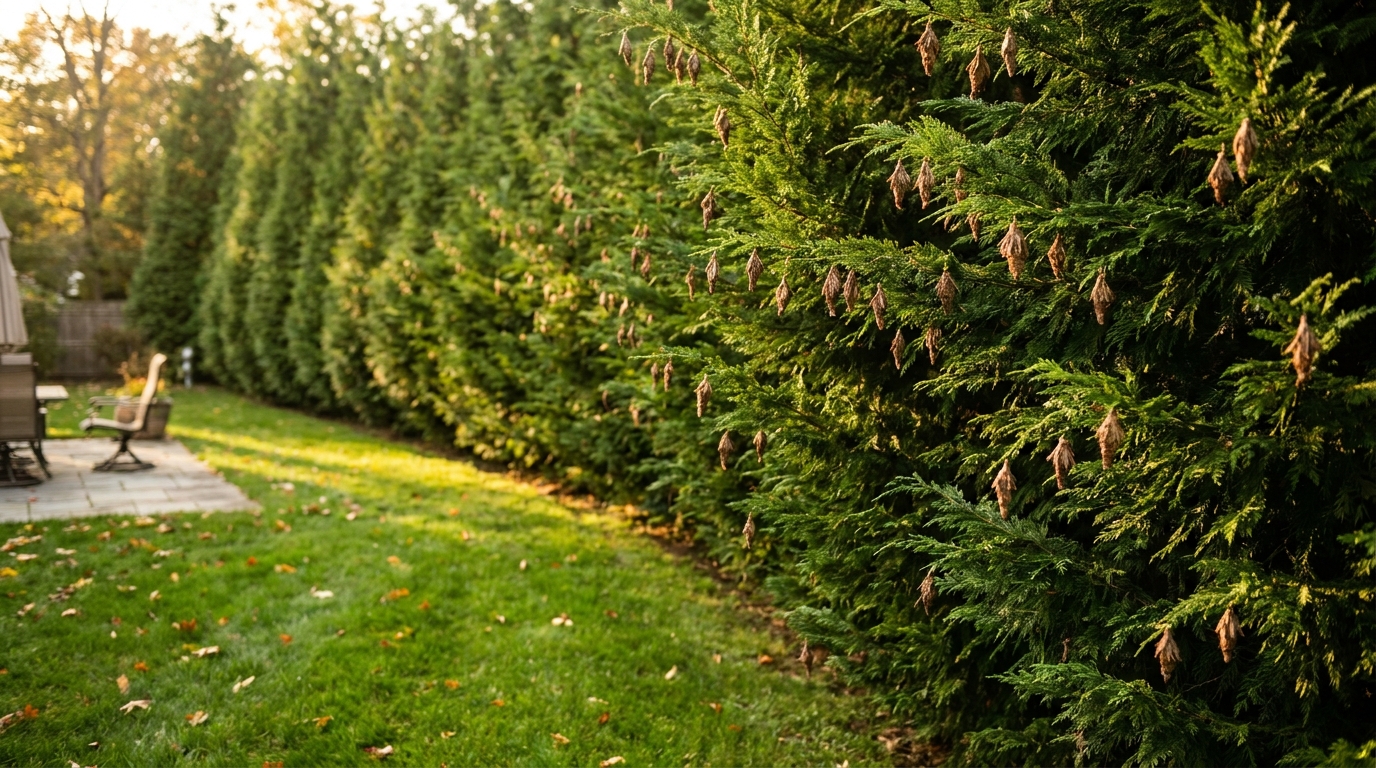
Brown bags on Leyland cypress in October are evergreen bagworms full of eggs, not seed cones. Cut them off through early spring, since a spray usually misses and stripped wood will not grow new needles.
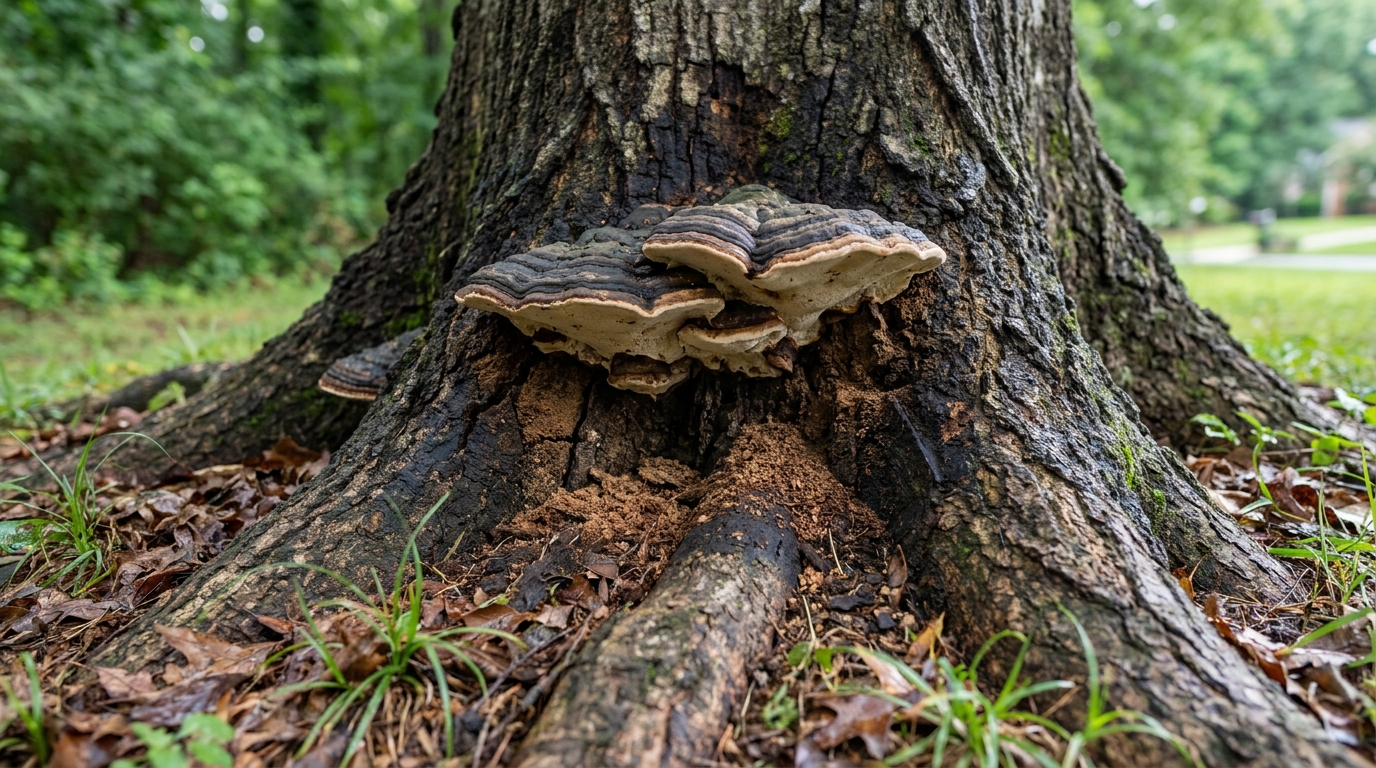
Cracked trunks, codominant stems, root upheaval, and shelf fungi are the warning signs a Waxhaw tree may be hazardous. Learn when to get a professional assessment.
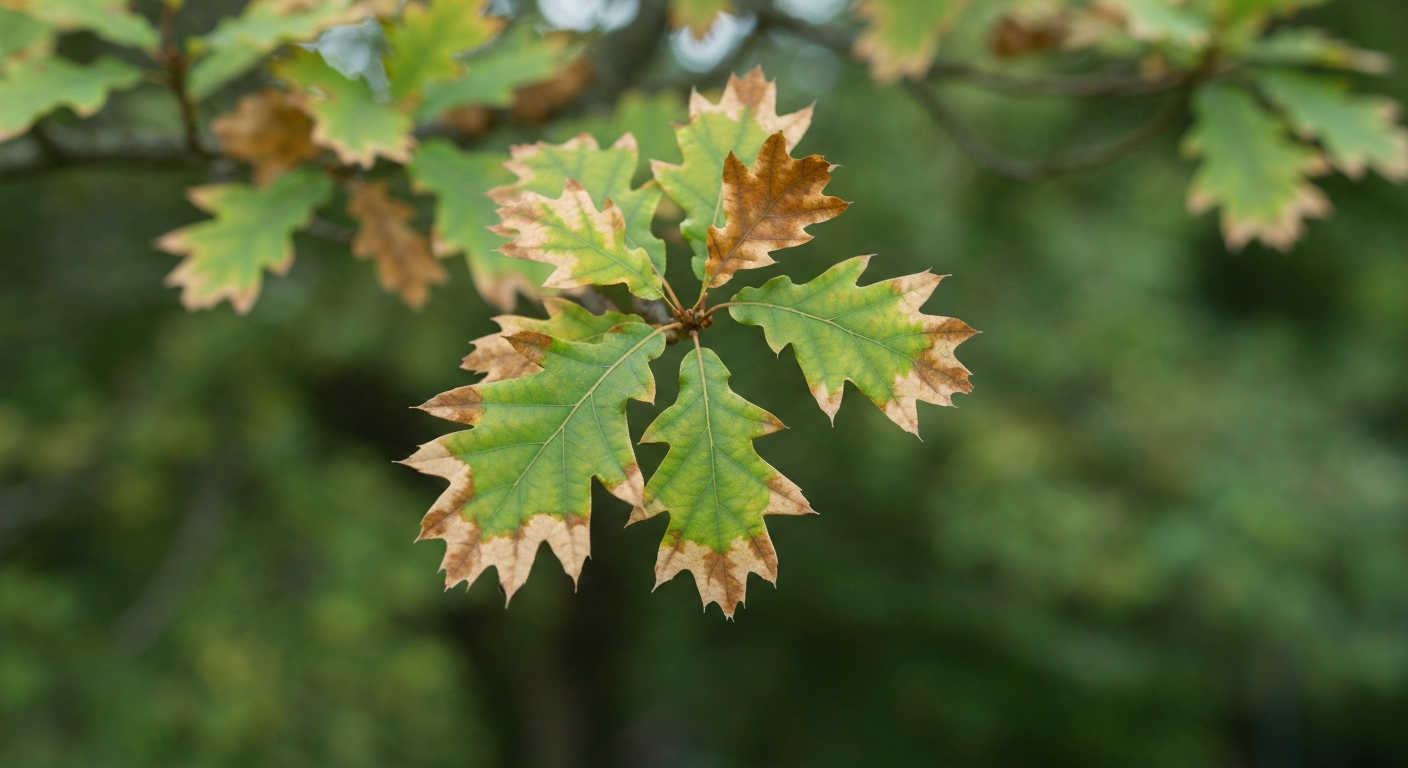
In Union County, late-summer oak browning is not always drought. Bacterial leaf scorch mimics thirst but is a fatal, insect-spread disease. Here is how to tell them apart, and what care actually helps.
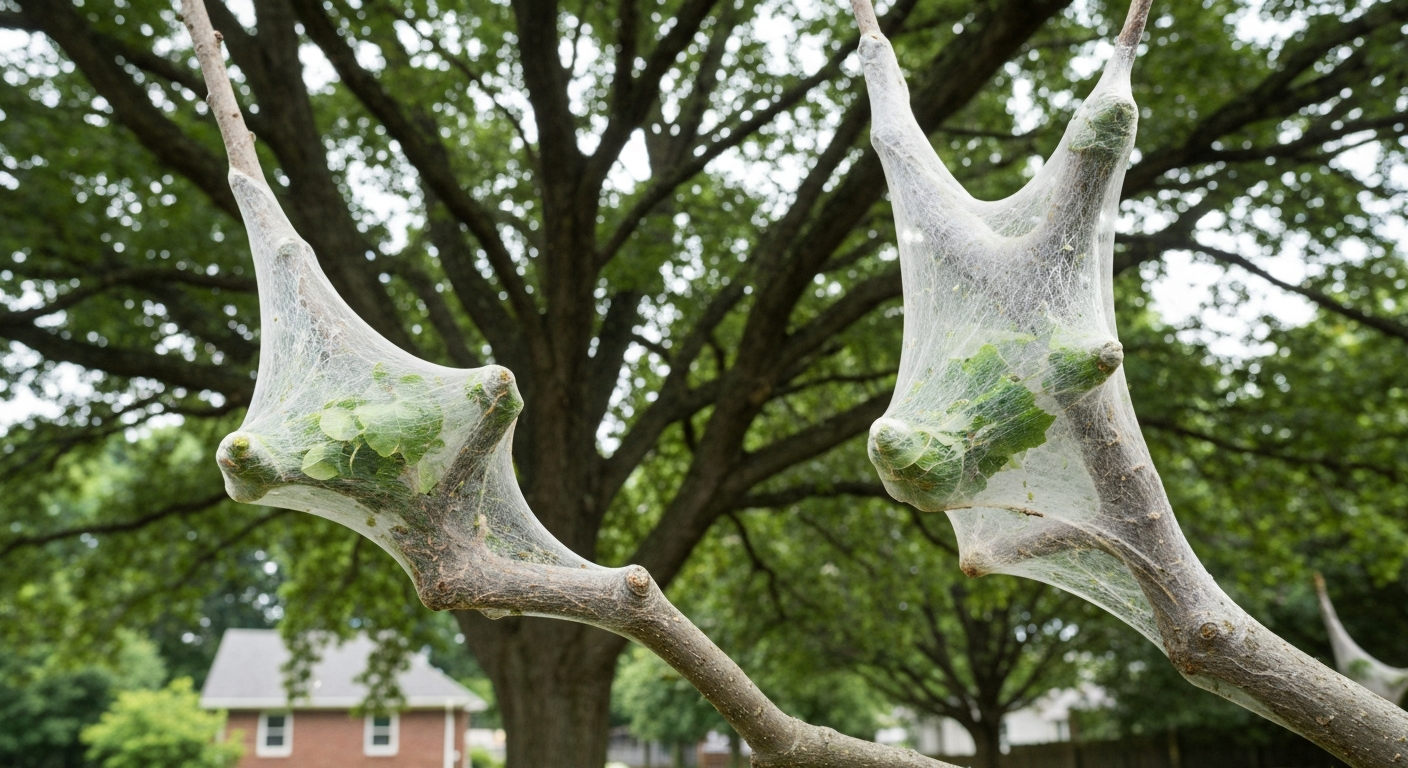
Those gauzy webs at your branch tips in late summer are fall webworm, a native caterpillar common around Waxhaw and Union County. Here is how to identify it, tell it apart from the spring eastern tent caterpillar, and decide, honestly, when it is worth doing anything about.
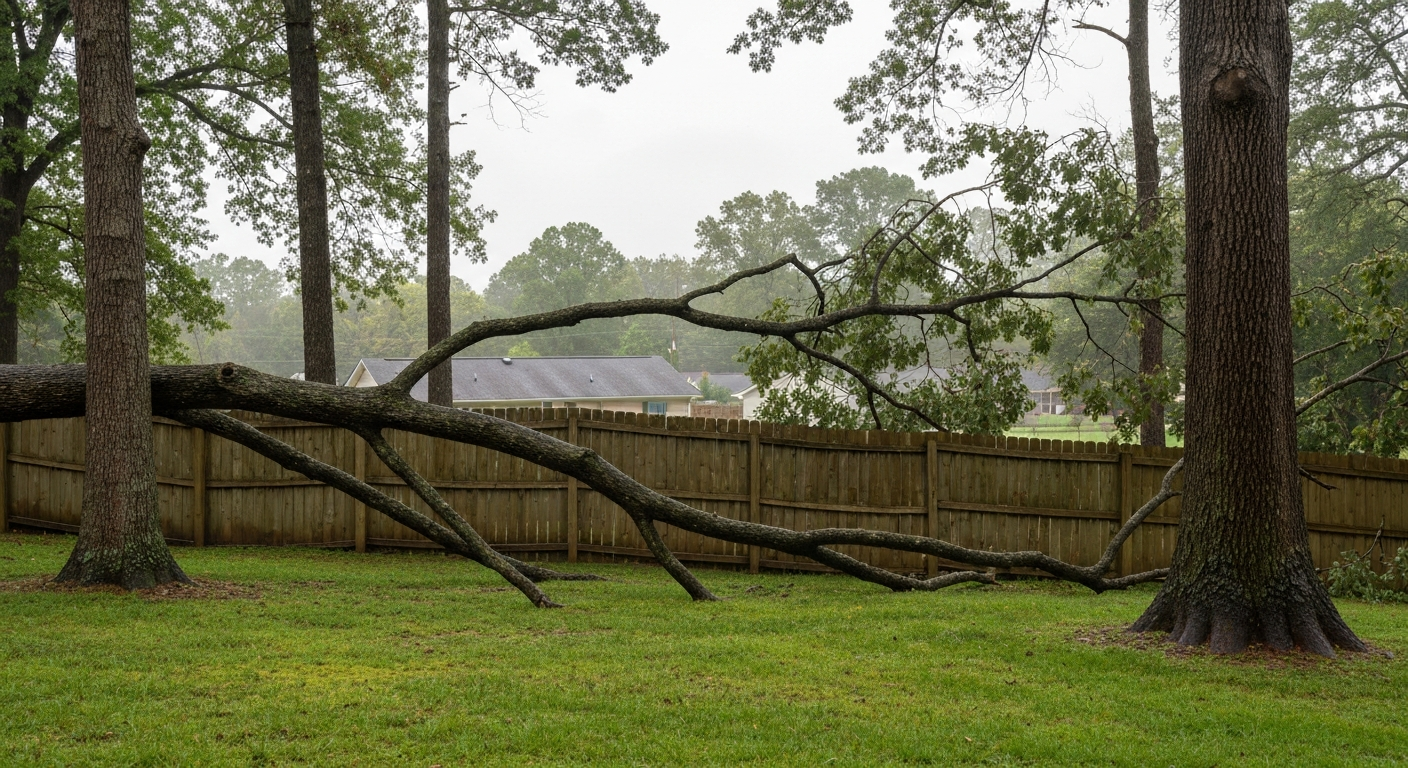
North Carolina does not make your neighbor automatically liable for their fallen tree. Liability turns on notice, and the most-cited NC case actually went against the homeowners. Here is how fault, contributory negligence, and your own homeowners policy really sort out, and what to do in the first days after a tree comes down.
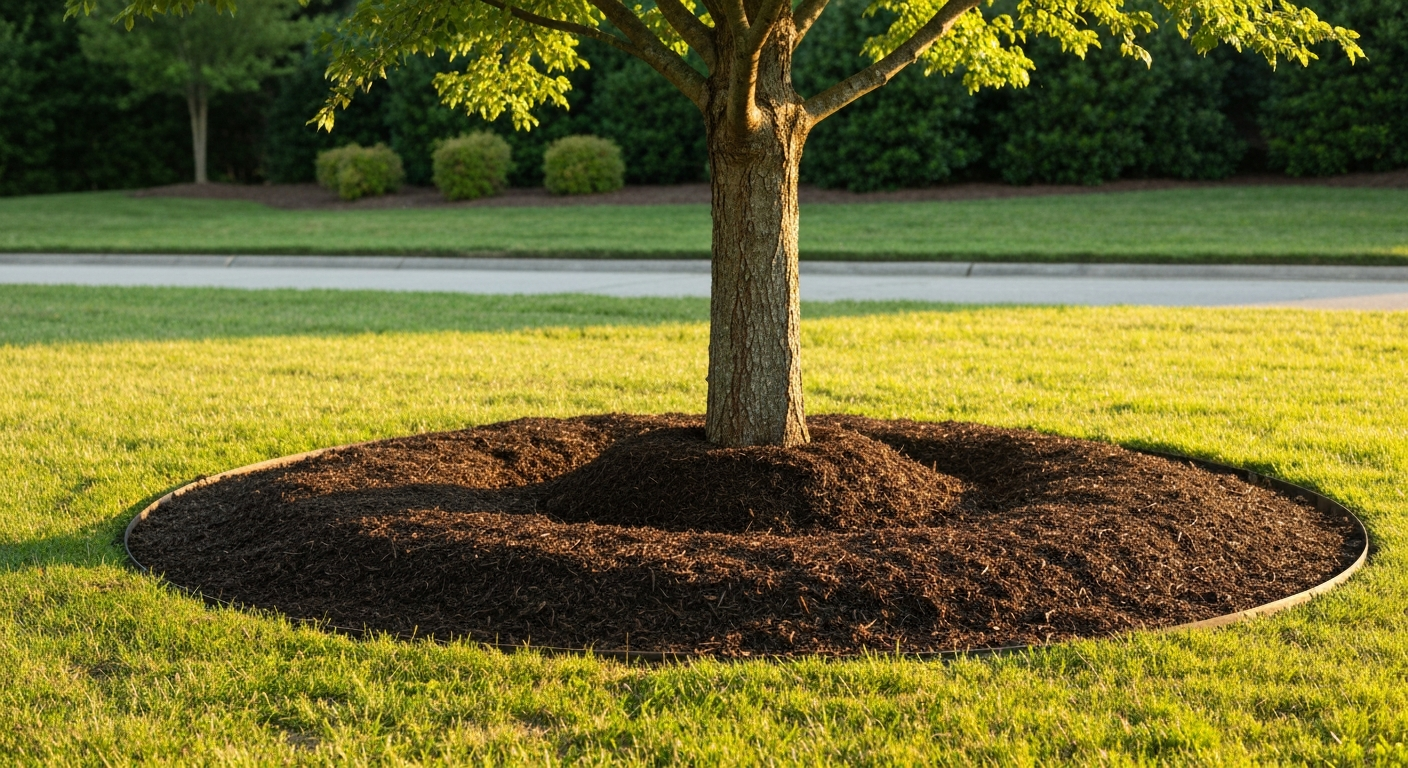
Done well, mulch is a 2 to 4 inch ring pulled back from the trunk. Done poorly, it becomes a mulch volcano that can kill a tree. Here is how to mulch trees the right way in Waxhaw and Union County, NC.
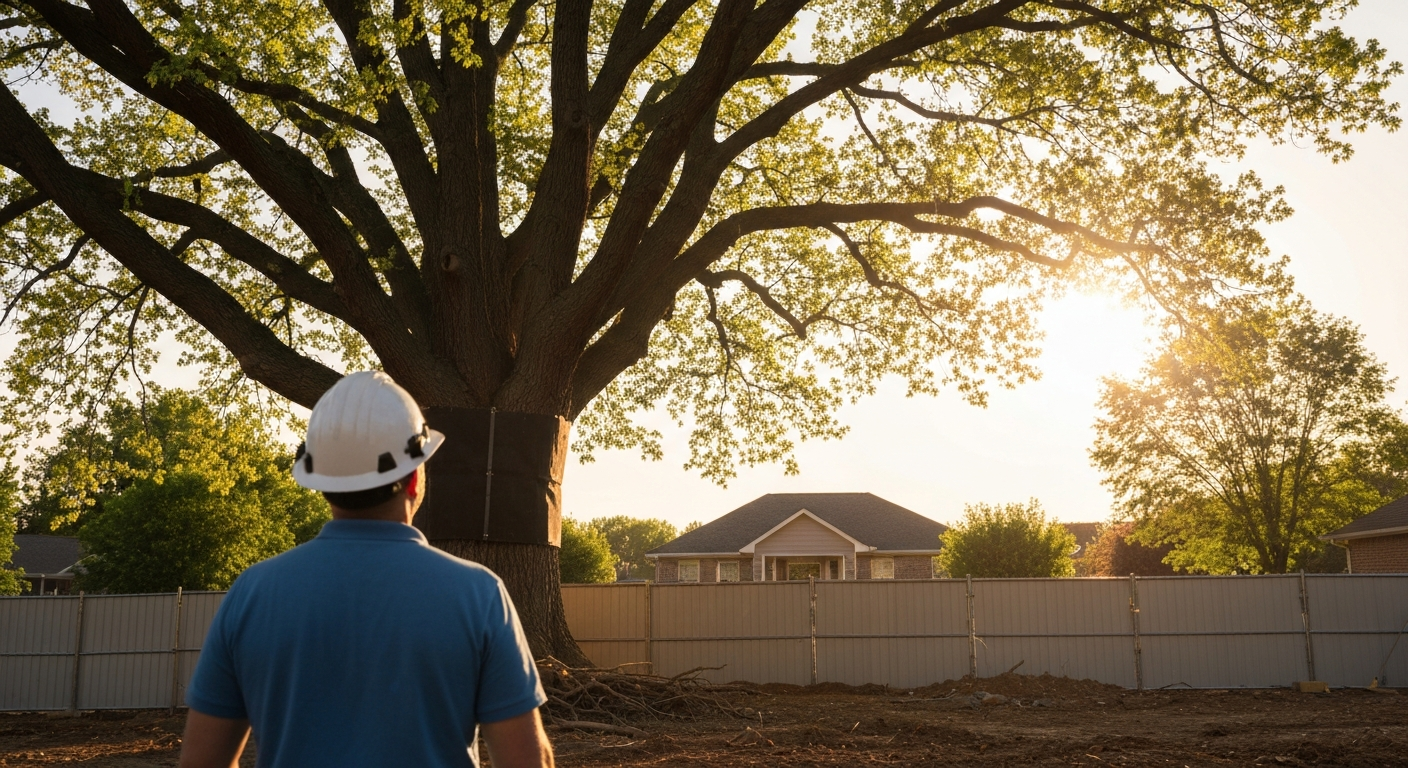
Protecting trees during construction in Waxhaw and Union County starts before machines arrive: fence a tree protection zone at or beyond each tree's critical root zone, then keep digging, traffic, and grade changes out until the work is done. This guide covers how close you can safely build, why construction damage often shows up years later, and when to bring in an arborist.
By Clarks Tree Care Team
We value your privacy
Clark's Tree Care uses Google Analytics 4 to understand aggregate site usage so we can serve homeowners better. No advertising or cross-site tracking cookies are used. You can opt out at any time by clicking “Reject,” or learn more in our
Cookie Policy.