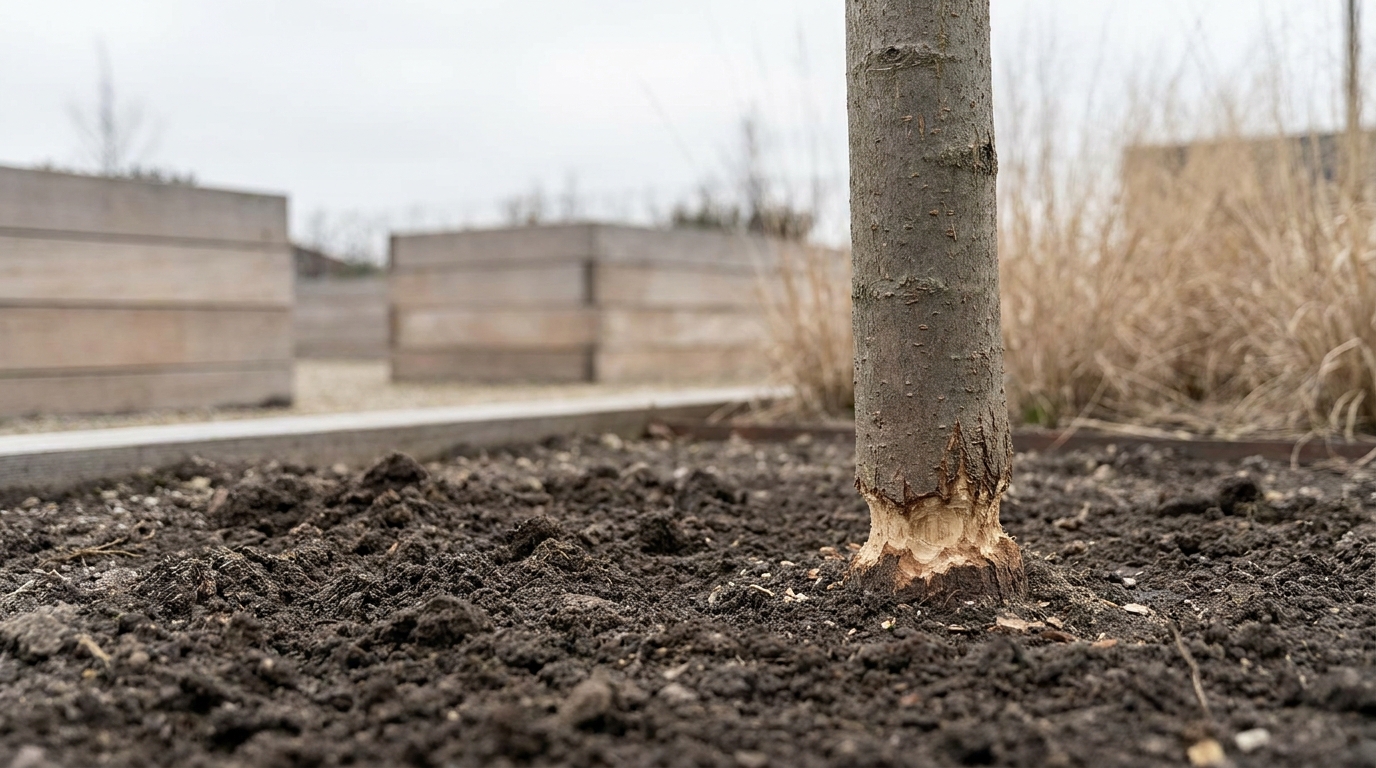
Vole damage on tree bark is a chewed ring at the soil line or just under the mulch, scored with small paired grooves. A complete circle can kill a young tree, and pruning will not grow that bark back.
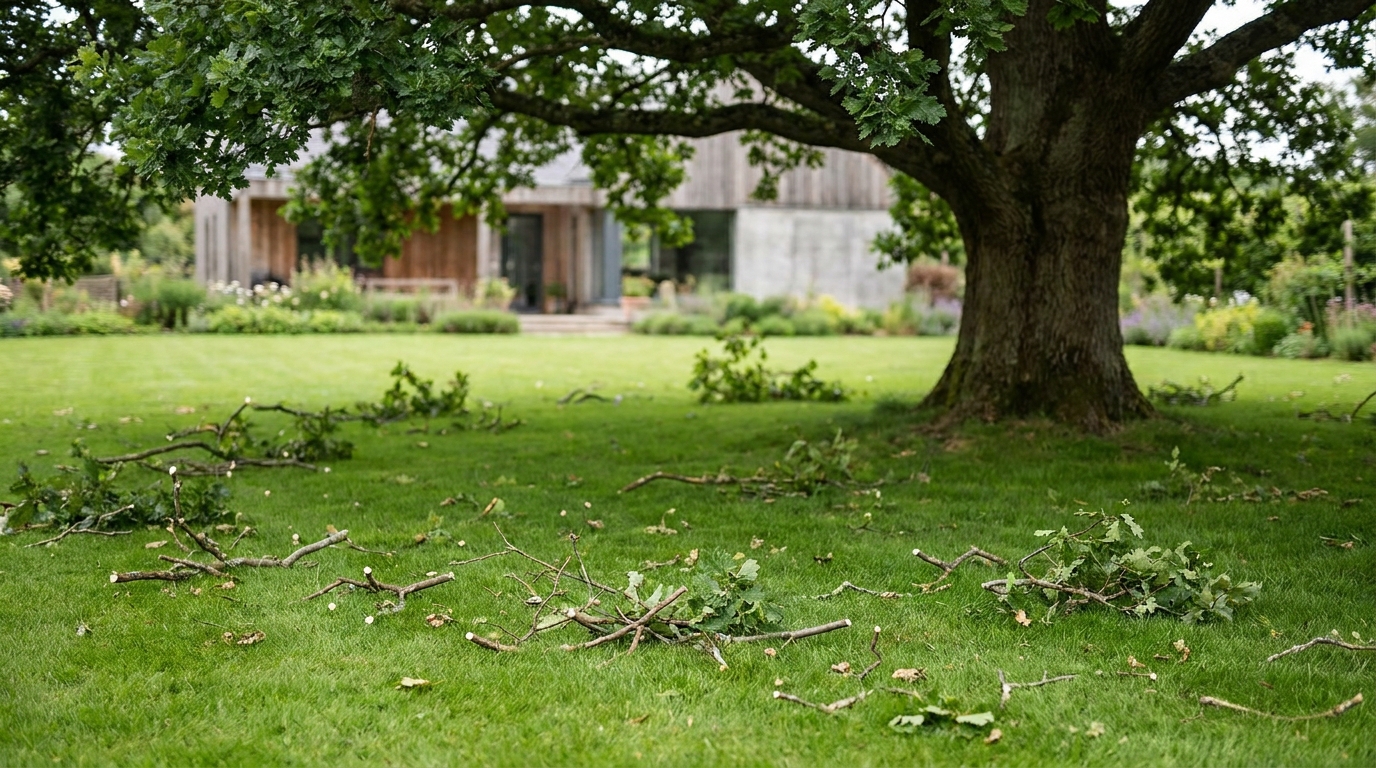
Pencil-thick twigs with leaves still attached are usually twig girdler damage from a native beetle, not a dying crown. On a healthy shade tree, gather the twigs and skip the spray.
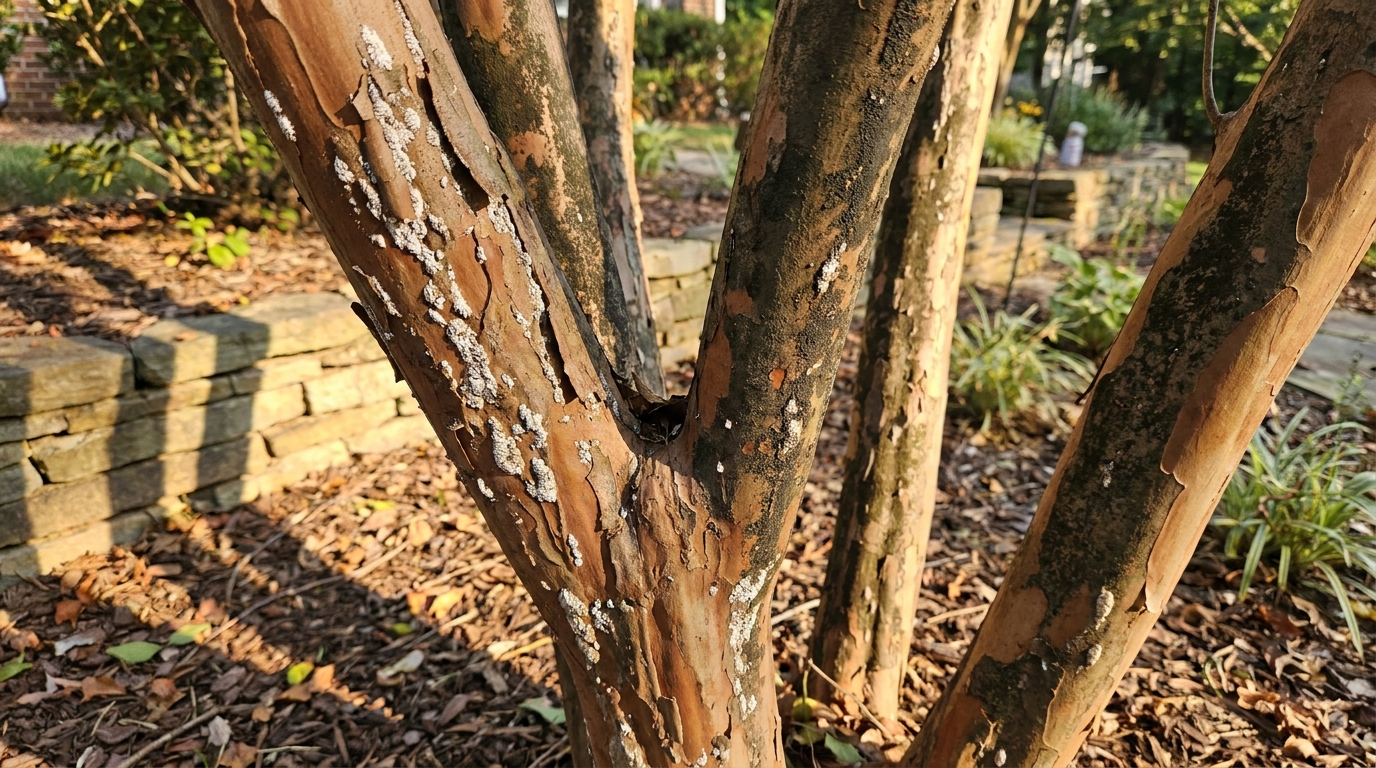
The white crust on a crape myrtle is bark scale, and the black film is sooty mold on honeydew, not a stain soaked into the wood. Washing can clean the mess, but the tree stays infested if the crust comes back.
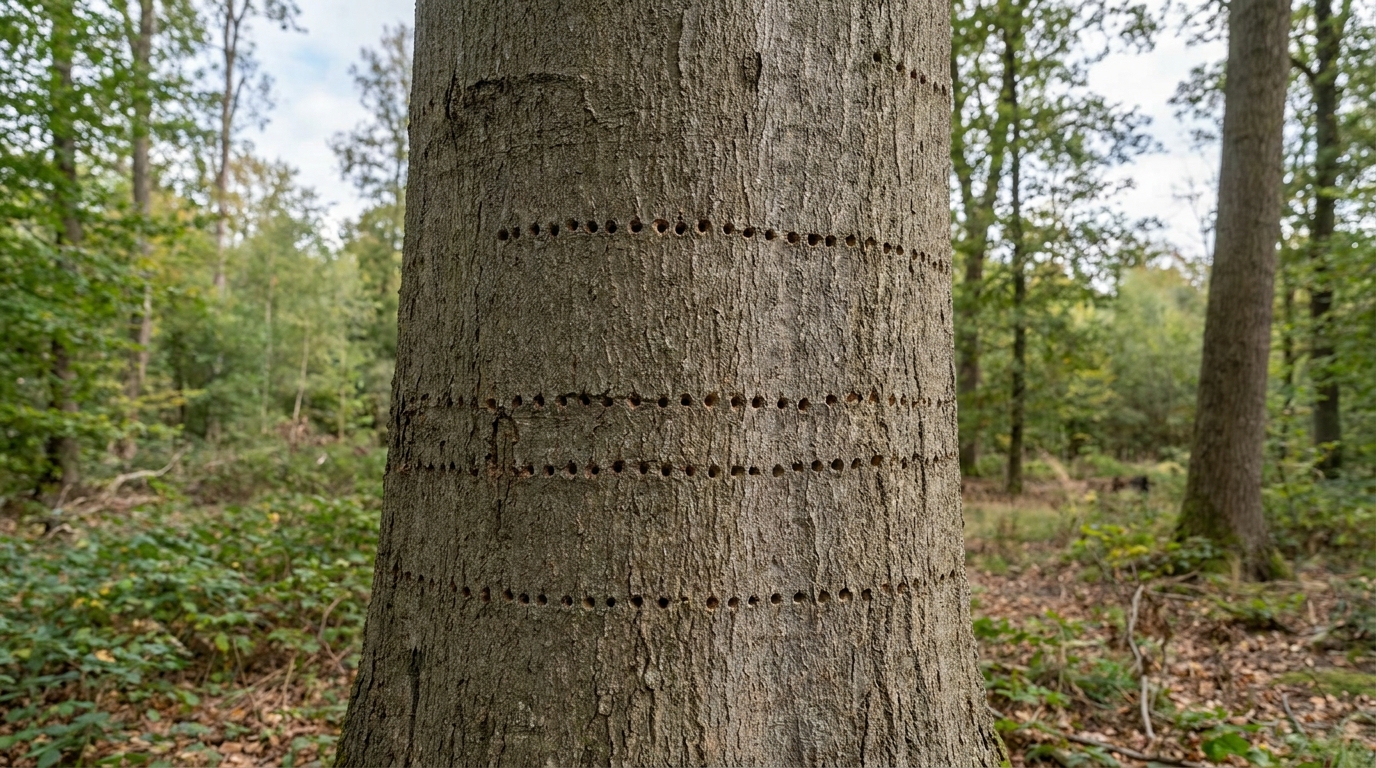
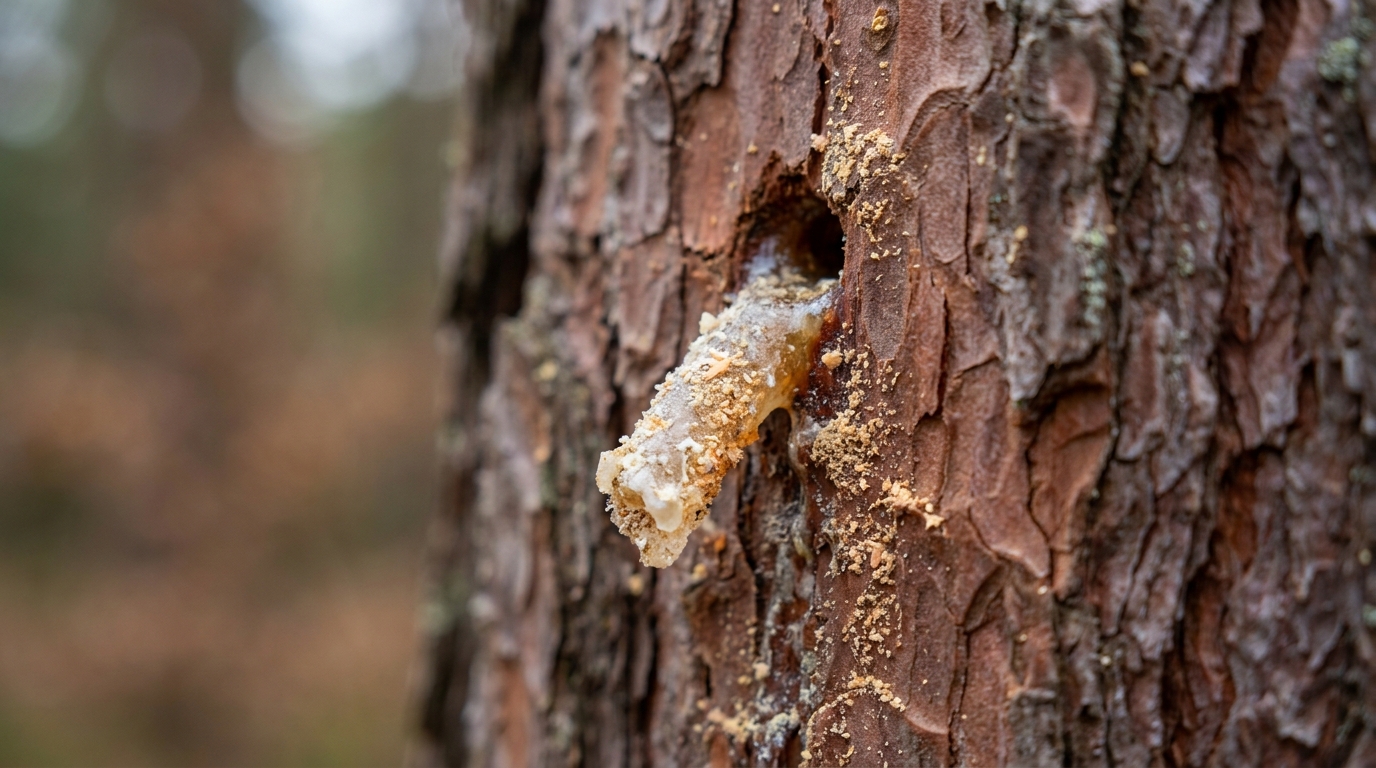
Straight rows of small holes are yellow-bellied sapsucker sap wells, not bark beetles. Most trees tolerate light feeding, while pitch tubes, boring dust, or D-shaped exits point to insects.
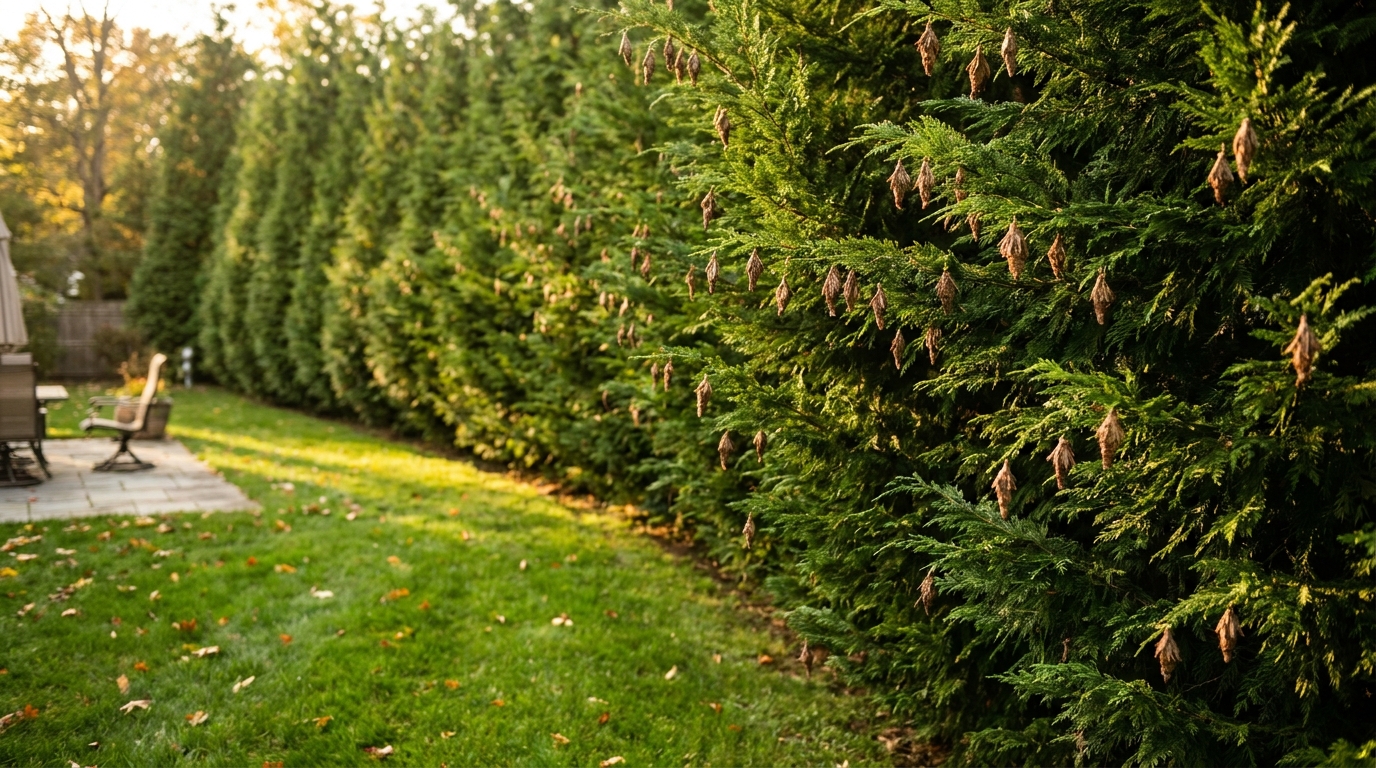
Brown bags on Leyland cypress in October are evergreen bagworms full of eggs, not seed cones. Cut them off through early spring, since a spray usually misses and stripped wood will not grow new needles.
Learn how to identify Ips engraver beetles versus Southern Pine Beetle damage on Union County pines, spot early warning signs, and protect high-value trees.
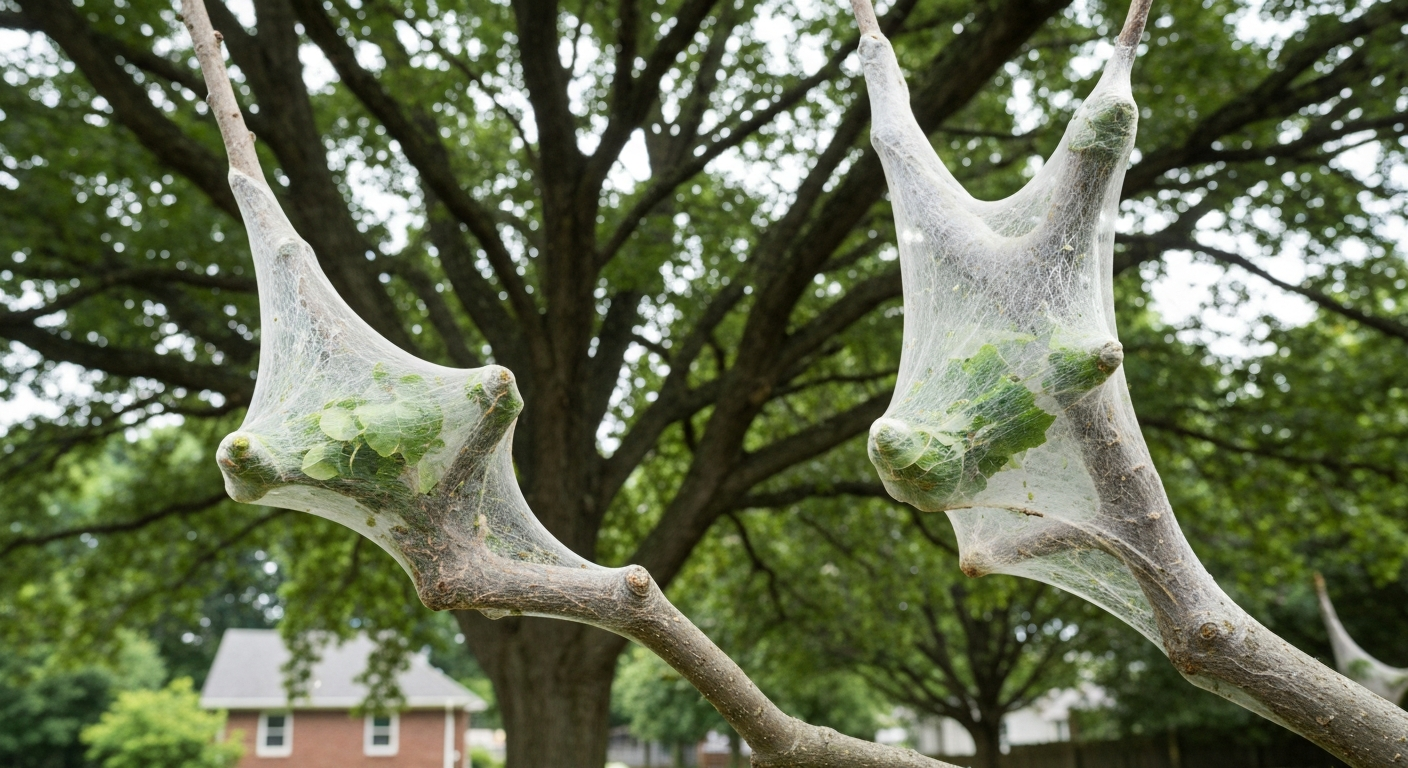
Those gauzy webs at your branch tips in late summer are fall webworm, a native caterpillar common around Waxhaw and Union County. Here is how to identify it, tell it apart from the spring eastern tent caterpillar, and decide, honestly, when it is worth doing anything about.
The emerald ash borer is now established statewide in North Carolina, including Waxhaw and Union County. Learn the signs, when to treat, and when removal is the safe choice.
Clark's Tree Care uses Google Analytics 4 to understand aggregate site usage so we can serve homeowners better. No advertising or cross-site tracking cookies are used. You can opt out at any time by clicking “Reject,” or learn more in our
Cookie Policy.