Pine Bark Beetle Outbreaks in Union County, NC: Identifying Ips vs. Southern Pine Beetle Damage and Protecting High-Value Pines
Why Pine Bark Beetles Threaten Pines in Waxhaw and Union County
Pine trees, particularly loblolly pine (Pinus taeda) and shortleaf pine (Pinus echinata), form a critical part of the canopy across Waxhaw, Monroe, and surrounding Union County neighborhoods. However, these valuable trees face recurring threats from native pine bark beetles. During periods of heat and summer dry spells in the North Carolina Piedmont, soil moisture drops and pine resin pressure declines. This combination leaves trees vulnerable to beetle colonization, as healthy sap flow is a pine tree's primary physical defense against boring insects. Homeowners who notice storm-damaged branches should address them promptly through professional tree trimming and pruning to prevent open wounds from attracting opportunistic pests.
Distinguishing the Key Species: Southern Pine Beetle vs. Ips Engraver Beetles
In North Carolina, pine bark beetle activity is primarily caused by two groups: the Southern Pine Beetle (Dendroctonus frontalis) and three species of Ips engraver beetles. According to NC State Extension documentation on pine bark beetles, all pine bark beetle species feed on the inner bark or phloem layer, girdling the nutrient-conducting tissues directly beneath the bark surface.
The Southern Pine Beetle is small, measuring about 1/8 inch in length (roughly the size of a grain of rice), with a rounded hind end. Adult Ips engraver beetles are dark reddish-brown to black and feature a distinct concave rear end lined with small spines. As documented in UGA Extension Circular 1132 on Ips bark beetles, four species of Ips occur in the Southeast, including the eastern six-spined engraver (Ips calligraphus), the eastern five-spined engraver (Ips grandicollis), the small southern pine engraver (Ips avulsus), and the pine engraver (Ips pini).
The internal galleries constructed beneath the bark are diagnostic for each group. Southern Pine Beetle galleries are S-shaped, wandering back and forth across the grain of the wood. In contrast, Ips engraver beetle galleries are I-, Y-, X-, or H-shaped, and the straight portions of those galleries run with the grain of the wood (up and down).
Recognizing Early Warning Signs on Your Property
Early identification of bark beetle attack is essential for managing risk around homes, driveways, and outbuildings. Key signs to inspect on mature pines include:
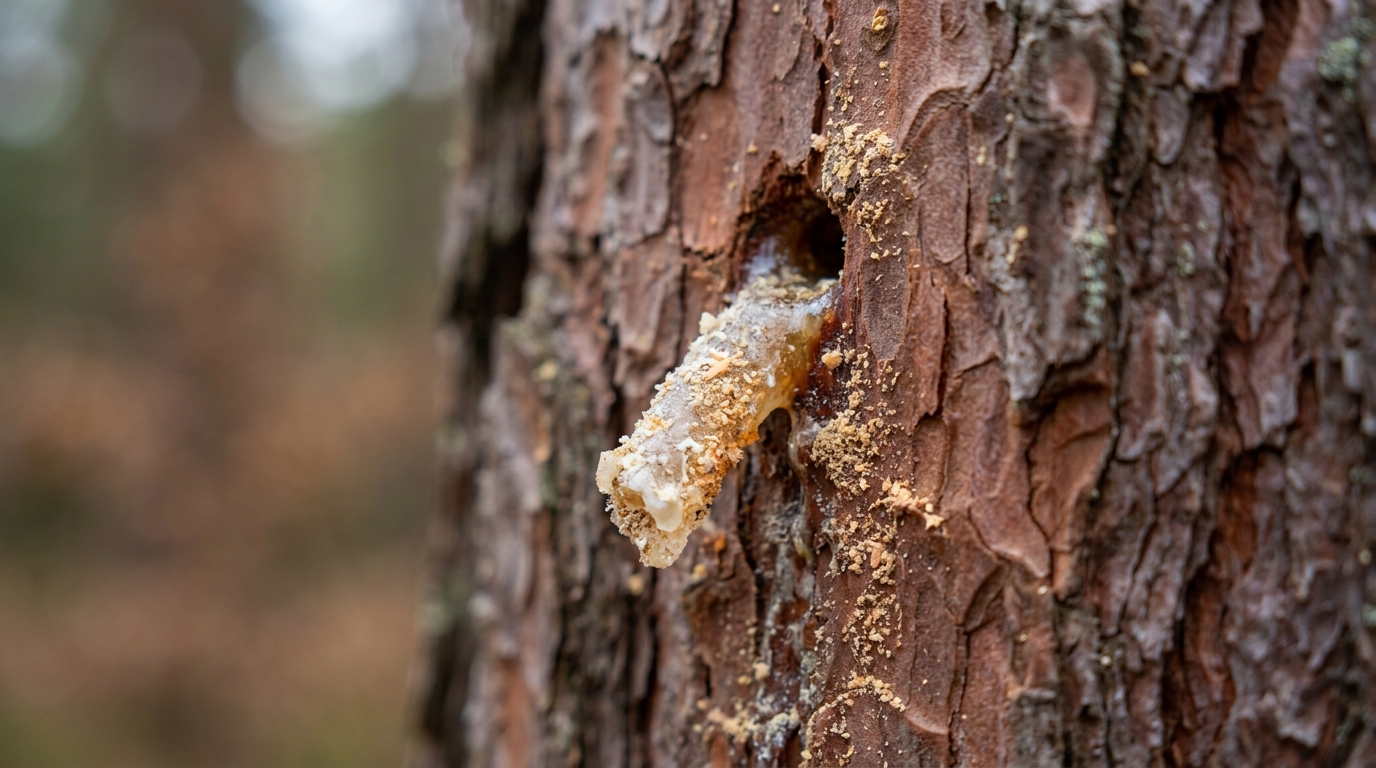
- Popcorn Pitch Tubes: Small, whitish to reddish masses of hardened sap extruding from bark crevices. These tubes mark locations where beetles attempted to bore through the bark and the tree responded by pumping out resin. On severely drought-stressed trees, resin flow may be too weak to produce visible pitch tubes.
- Fine Boring Dust: Our crews also check bark furrows and the ground at the base of the trunk for reddish-brown dust left behind as beetles tunnel in. It is easy to miss unless you look closely at the lower trunk.
- Needle Color Progression: During a bark beetle attack, pine needles fade from green to light green, to yellow, to red. These red-topped trees stand out clearly against surrounding green foliage.
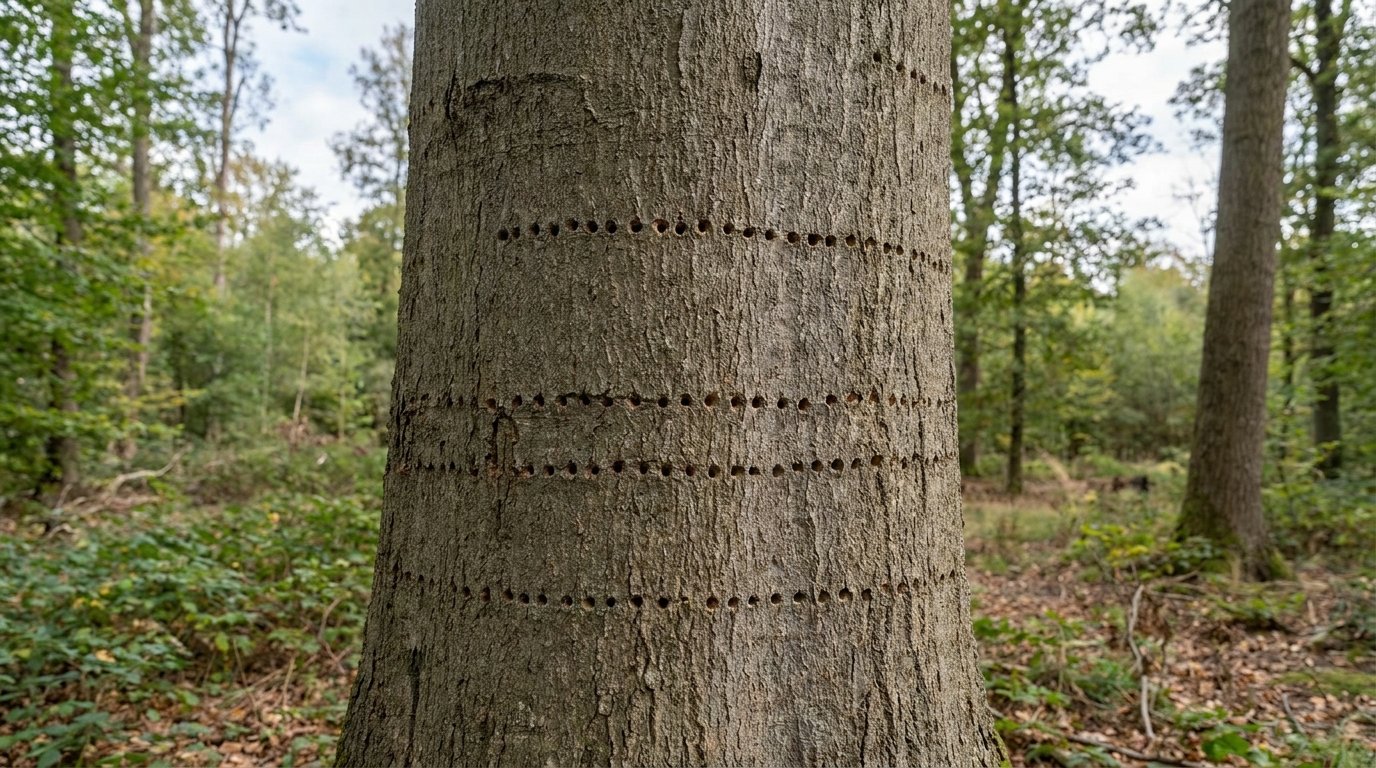
- Woodpecker Activity: Heavy woodpecker work on the trunk, with bark plates chipped away, is another field sign we treat as a reason to inspect a pine closely.
If you suspect a tree on your lot has become structurally unstable from pest damage or decay, review our guide on recognizing hazardous trees in Waxhaw for additional risk indicators.
Aggressiveness and Spread: Single Tree Stress vs. Expanding Spots
Understanding the behavior of each beetle group helps homeowners determine whether a single tree or an entire pine grove is at risk. As explained in NC State Extension guidance on pine engraver beetles, Ips beetles prefer to breed in fallen trees and in slash left behind after logging, but they sometimes infest apparently healthy trees, especially after droughts or injury. That same guidance notes that spots of infested trees are likely to increase in size during droughts, so a dry Piedmont summer can turn one struggling pine into a widening pocket of damage.
The Southern Pine Beetle follows a different pattern. NC State Extension notes that most years the Southern Pine Beetle behaves as a secondary pest, attacking already-stressed trees, but that cyclical outbreaks can result in widespread pine mortality. That cyclical behavior is what makes this species worth watching on a wooded lot. A quiet year tells you very little about the next one.
Preventive Care and Risk Reduction for Landscape Pines
Maintaining strong tree vigor is the most effective defense against pine bark beetles. Homeowners can take several practical steps to reduce vulnerability:
- Deep Watering: Provide deep, infrequent irrigation around the drip line of high-value landscape pines during dry summer months to support natural resin production.
- Avoid Soil Compaction: Keep heavy equipment and vehicle parking away from critical root zones to preserve soil aeration and root health.
- Time Pruning Carefully: Schedule routine pine branch trimming during the cooler winter months when bark beetles are dormant, avoiding fresh pruning cuts during warm periods when volatile resin compounds attract flying beetles.
- Prompt Removal of Fresh Slash: Clear away storm-broken pine limbs and fresh logging debris quickly, as green slash provides ideal breeding material for Ips beetles.
When to Remove Infested Pines to Protect Neighboring Timber
By the time a pine has a fully red canopy and bark that is sloughing off, the tree is dead, and the beetles that killed it have usually already flown. That is why the trees still standing green around it matter more than the red one does. For an active Southern Pine Beetle spot, NC State Extension describes spot management as cutting down the trees with an active infestation along with a buffer of green trees, with that wood either taken off the property (cut-and-remove) or left on site (cut-and-leave). Dead pines also degrade quickly in Piedmont humidity, which creates a real hazard near driveways, roofs, and utility lines. Where removal is the right call, our crew handles complete site clearing, including safe pine tree removal and stump grinding services to clean up root zones.
Professional Arborist Assessment in Union County, NC
Have more questions or want to get in touch? If you notice fading pine tops, pitch tubes, or excessive needle drop on your property, a certified arborist assessment can determine the exact cause and recommend a tailored care or removal plan. Prefer to speak with a member of our team? Give us a call at (980) 247-TREE, or request a free quote online. We are available during our business hours to assist you.