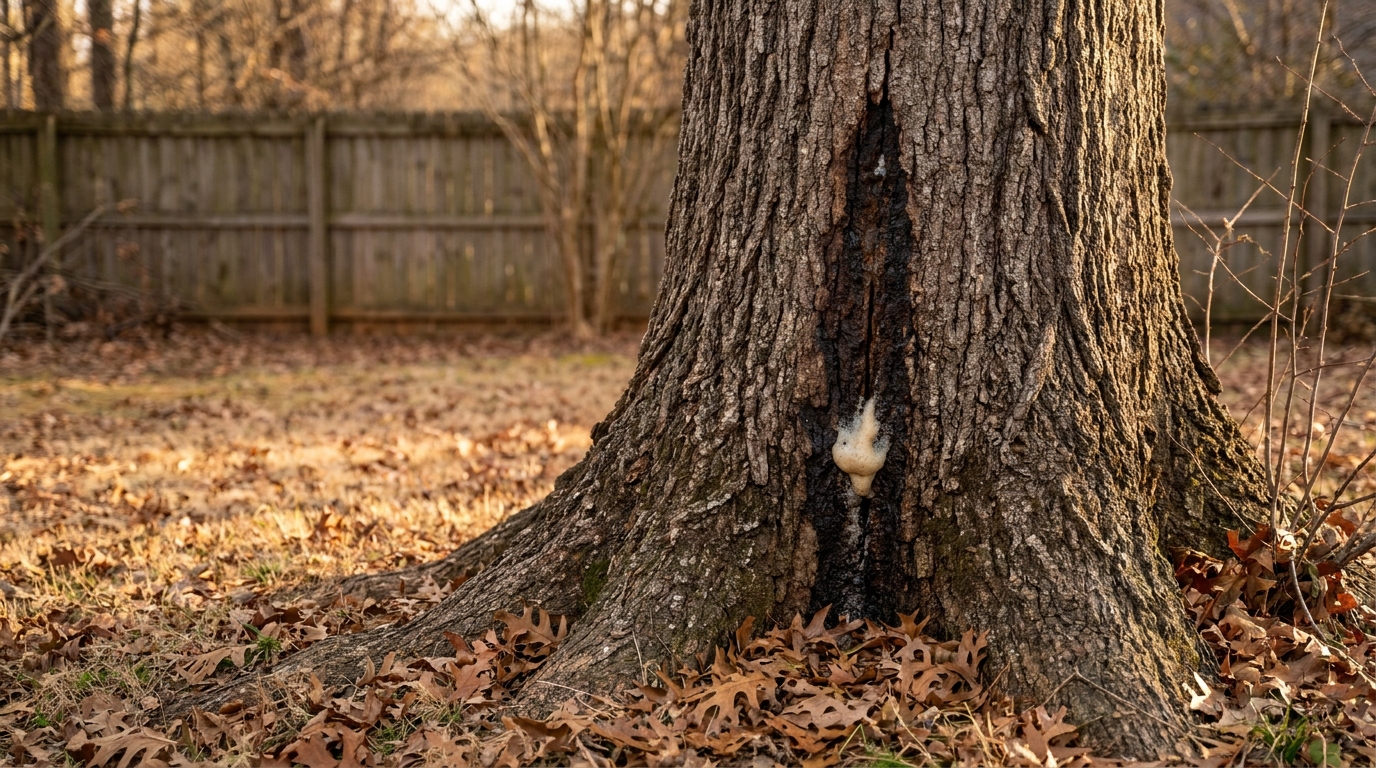
Sour foam or a dark streak on an oak, elm, or maple is usually slime flux from bacterial wetwood. It looks bad, has no spray that cures it, and by itself rarely means the tree is dying.
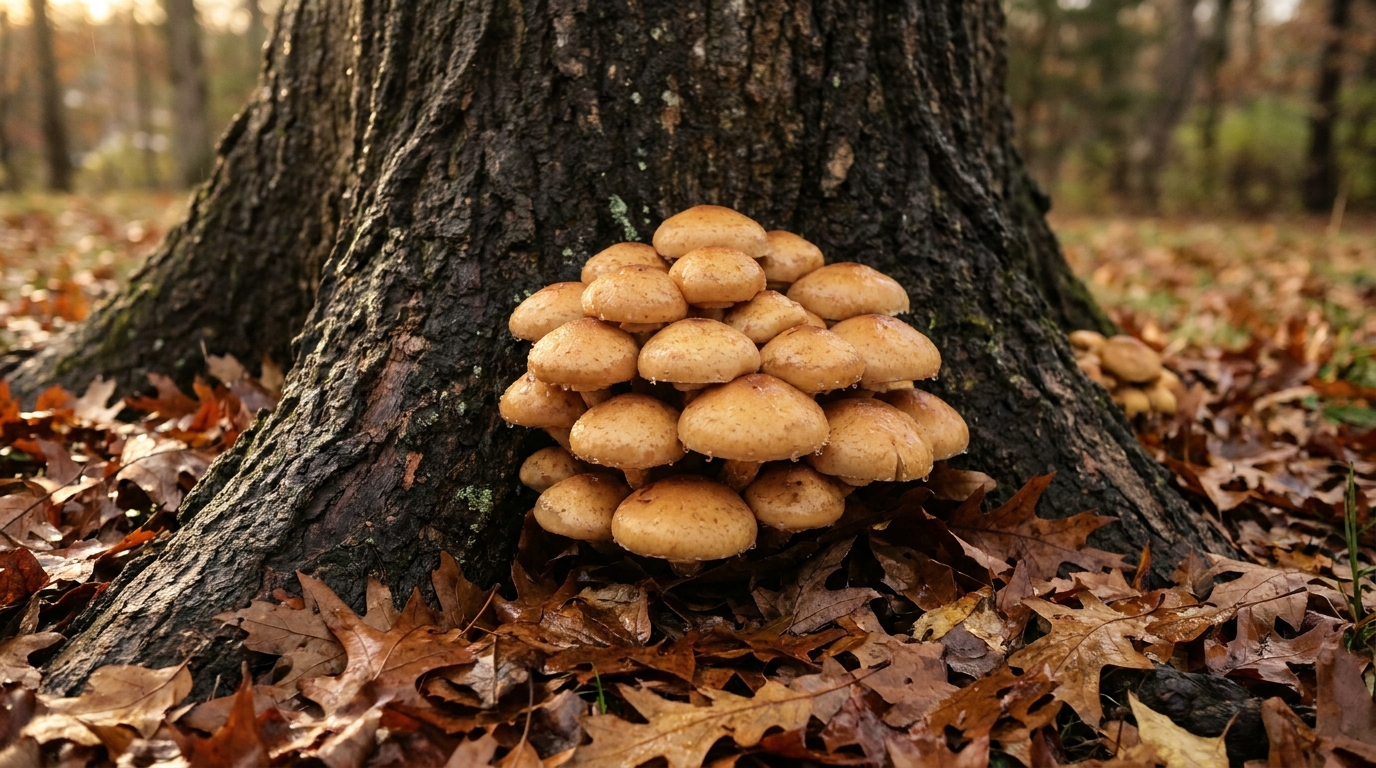
Honey mushrooms at the base of a tree in November can point to Armillaria root rot. The caps are a clue, not a cure, and a declining tree over a house or drive should be checked before it fails.
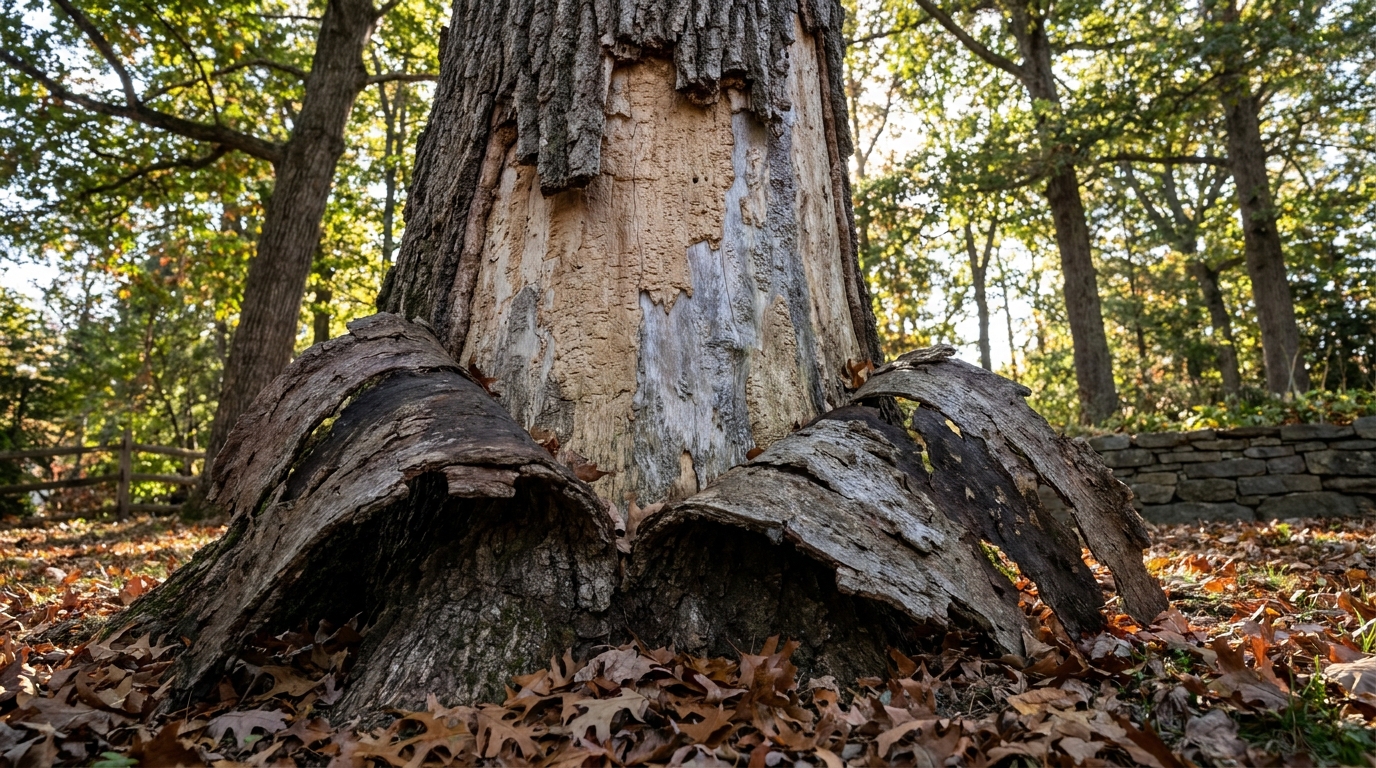
On an oak in Union County, bark that falls off and leaves a flat crust is often hypoxylon canker. Widespread crust on the trunk means removal, not a spray, because the wood is already failing.
Southern magnolias often drop their oldest interior leaves in October while the outer crown stays green, and that pile is usually normal. Brown new growth, scorched margins, or dead limbs are the signs that need a closer look.
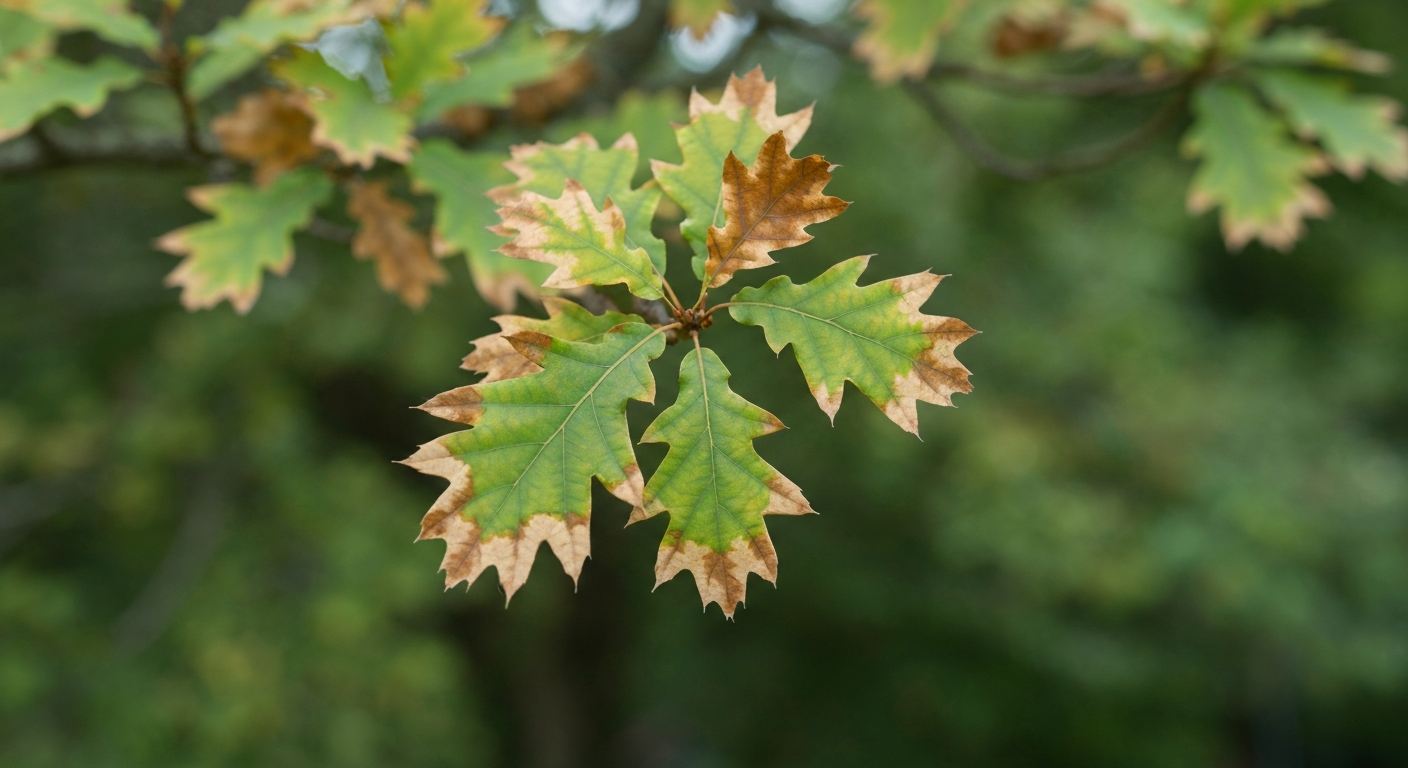
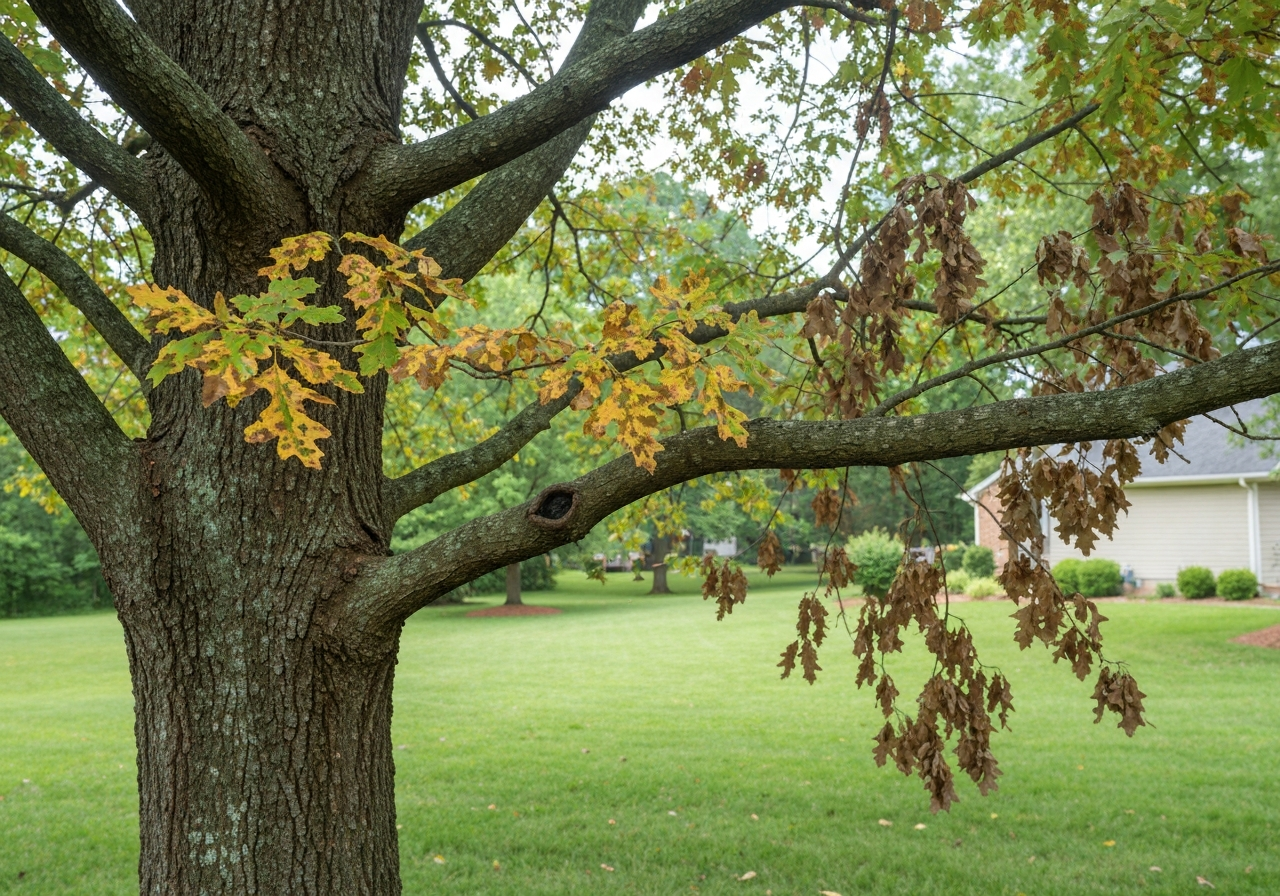
In Union County, late-summer oak browning is not always drought. Bacterial leaf scorch mimics thirst but is a fatal, insect-spread disease. Here is how to tell them apart, and what care actually helps.
The emerald ash borer is now established statewide in North Carolina, including Waxhaw and Union County. Learn the signs, when to treat, and when removal is the safe choice.
Clark's Tree Care uses Google Analytics 4 to understand aggregate site usage so we can serve homeowners better. No advertising or cross-site tracking cookies are used. You can opt out at any time by clicking “Reject,” or learn more in our
Cookie Policy.