Pine needle drop in fall is usually normal. The oldest inner needles turn yellow or brown while this year's tips stay green, and a thick carpet with green tips is a raking job rather than a reason to remove the tree.
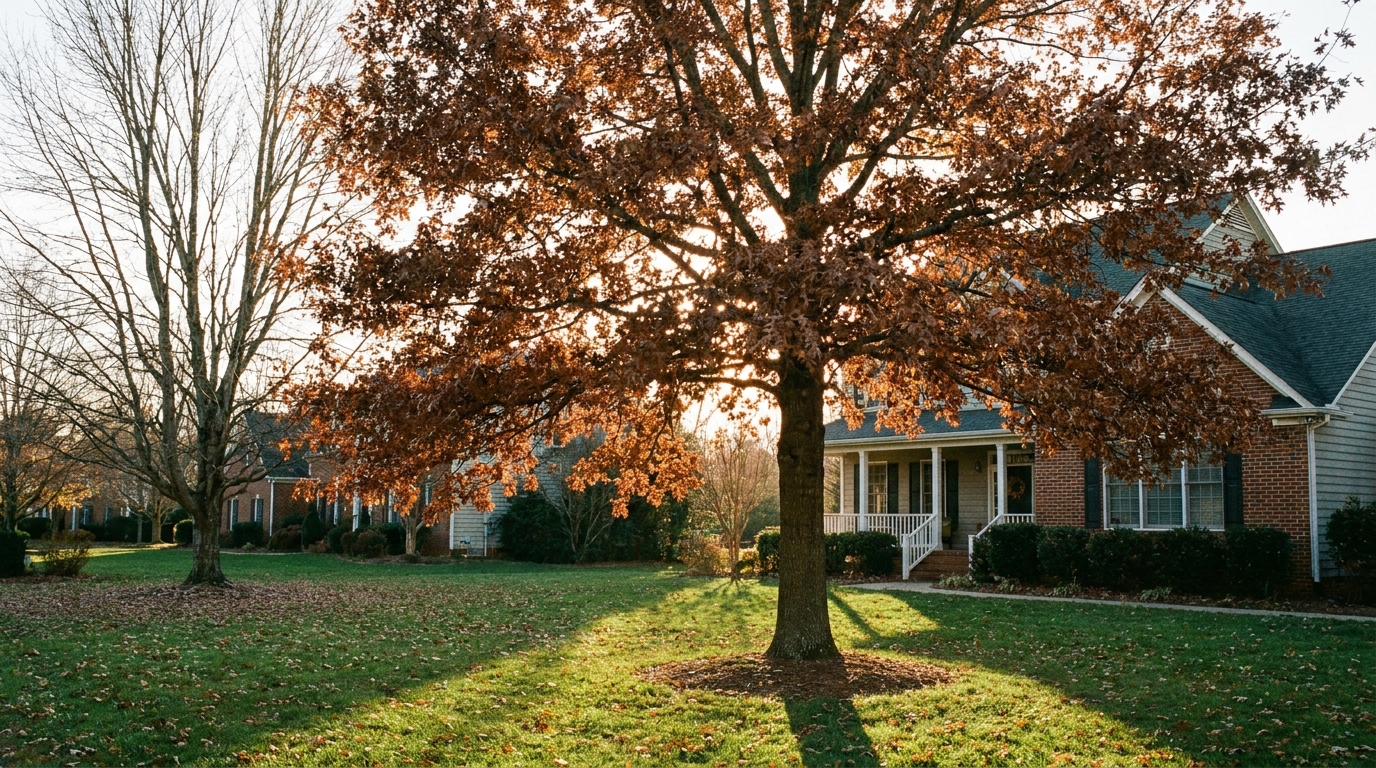
Oaks that keep brown leaves in winter around Waxhaw are usually still holding last year's dead leaves. That habit, called marcescence, is common on pin oaks and young oaks and is not a dead tree by itself.
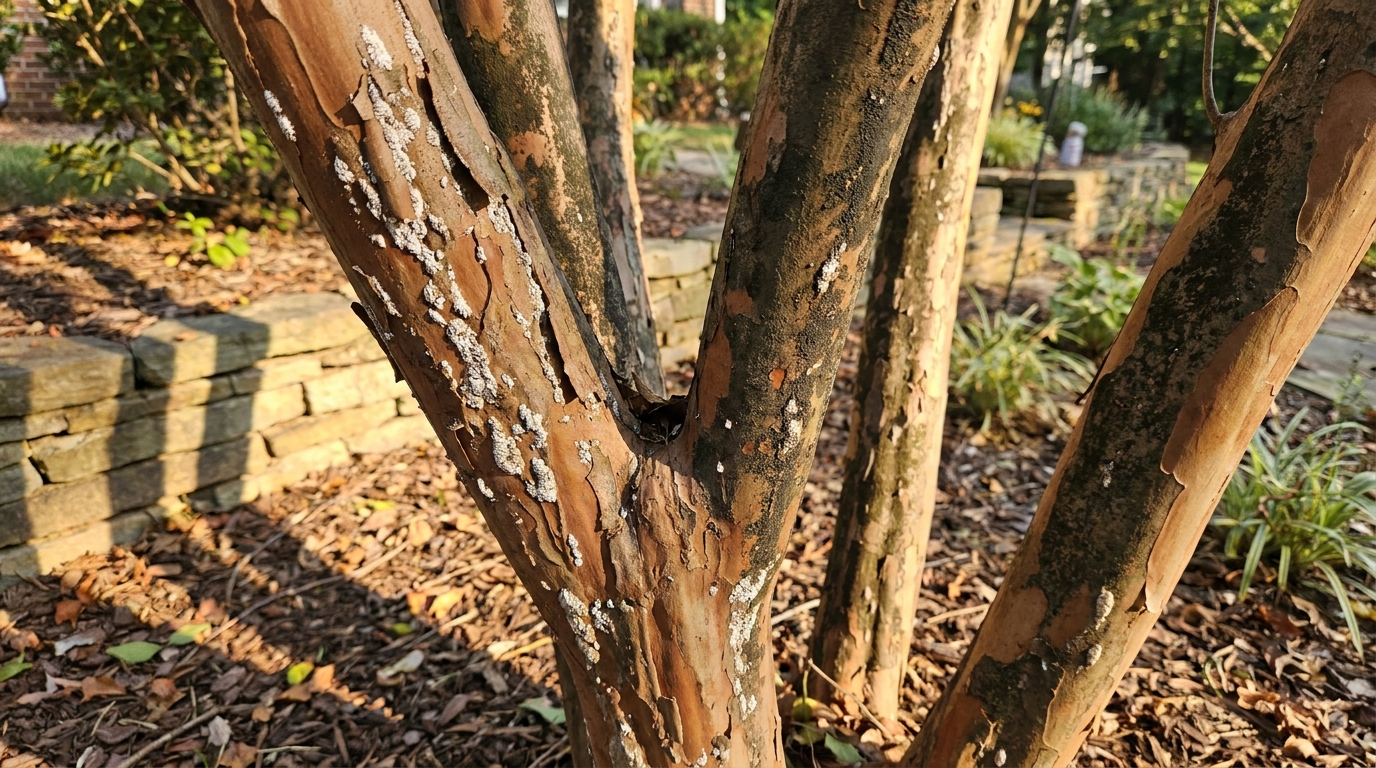
The white crust on a crape myrtle is bark scale, and the black film is sooty mold on honeydew, not a stain soaked into the wood. Washing can clean the mess, but the tree stays infested if the crust comes back.
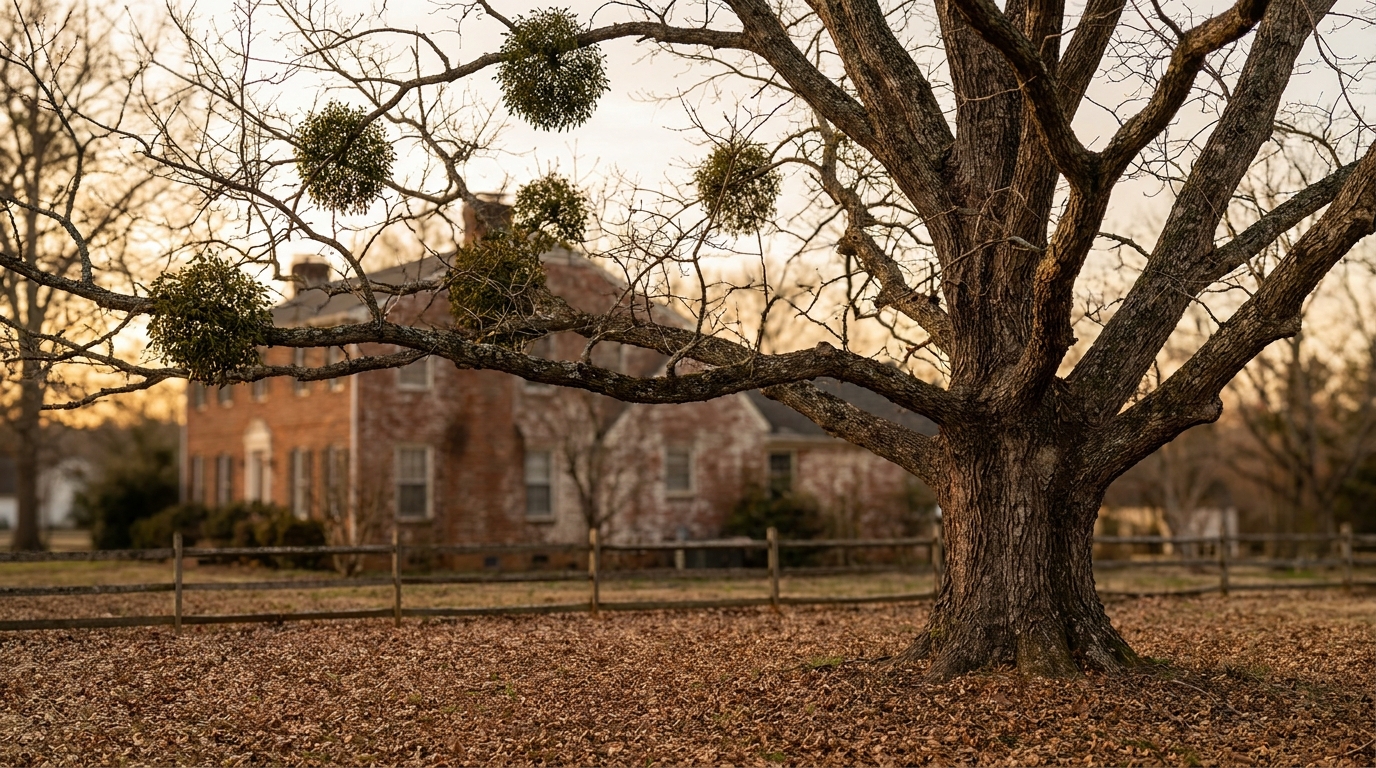
A few outer mistletoe clumps on a sound hardwood can be pruned past the attachment. Remove the tree if you cannot leave a sound crown or the wood is already a hazard, and do not spray.
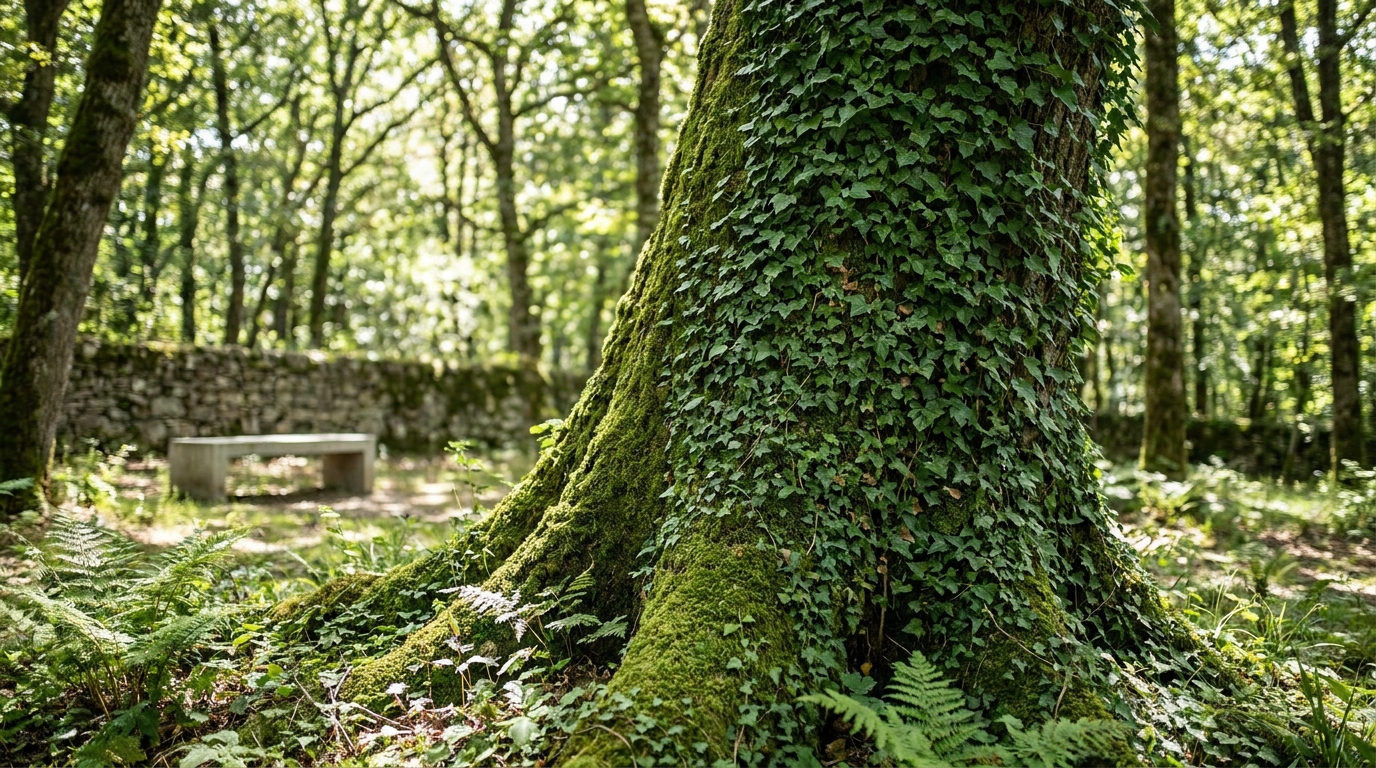
Cut English ivy on tree trunks at the base and leave the vines above to die on the bark. Do not pull them off, because that can peel bark and snap limbs.
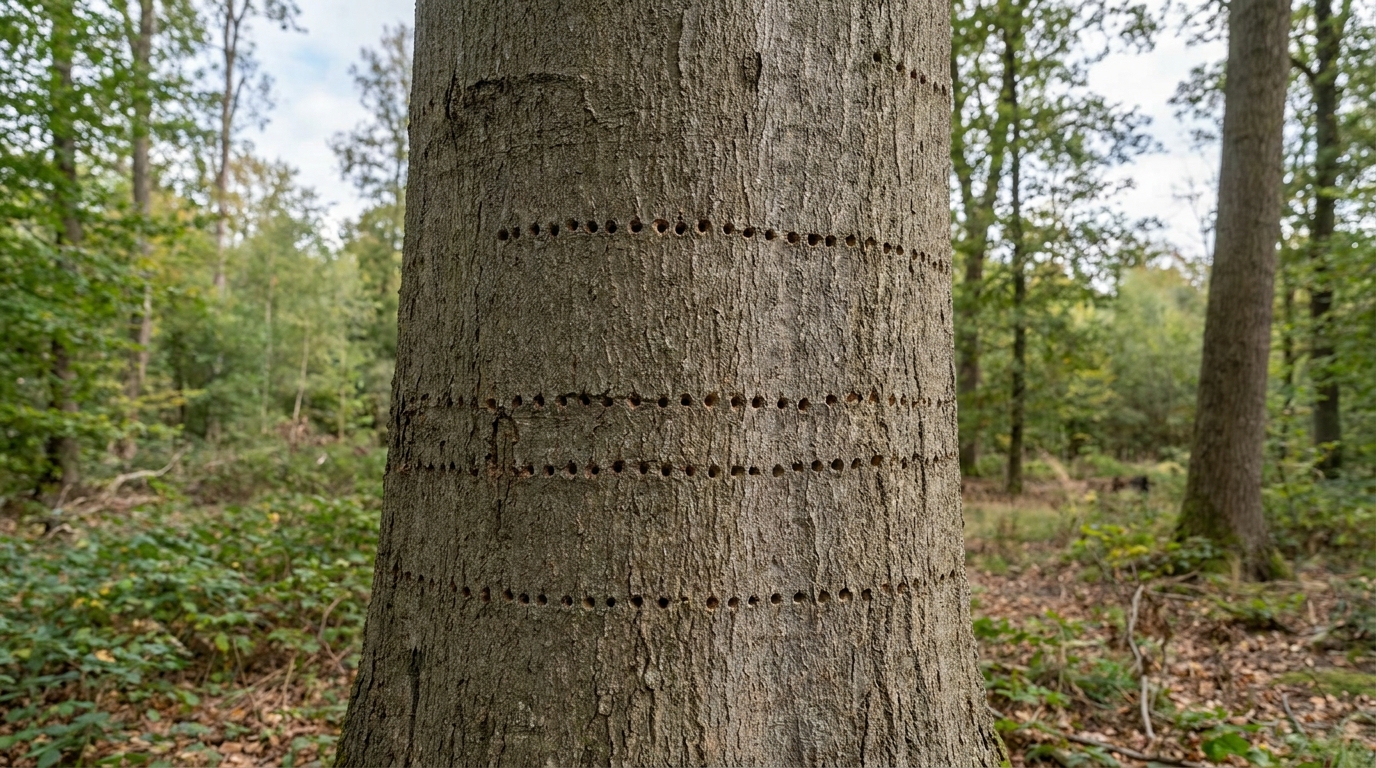
Straight rows of small holes are yellow-bellied sapsucker sap wells, not bark beetles. Most trees tolerate light feeding, while pitch tubes, boring dust, or D-shaped exits point to insects.
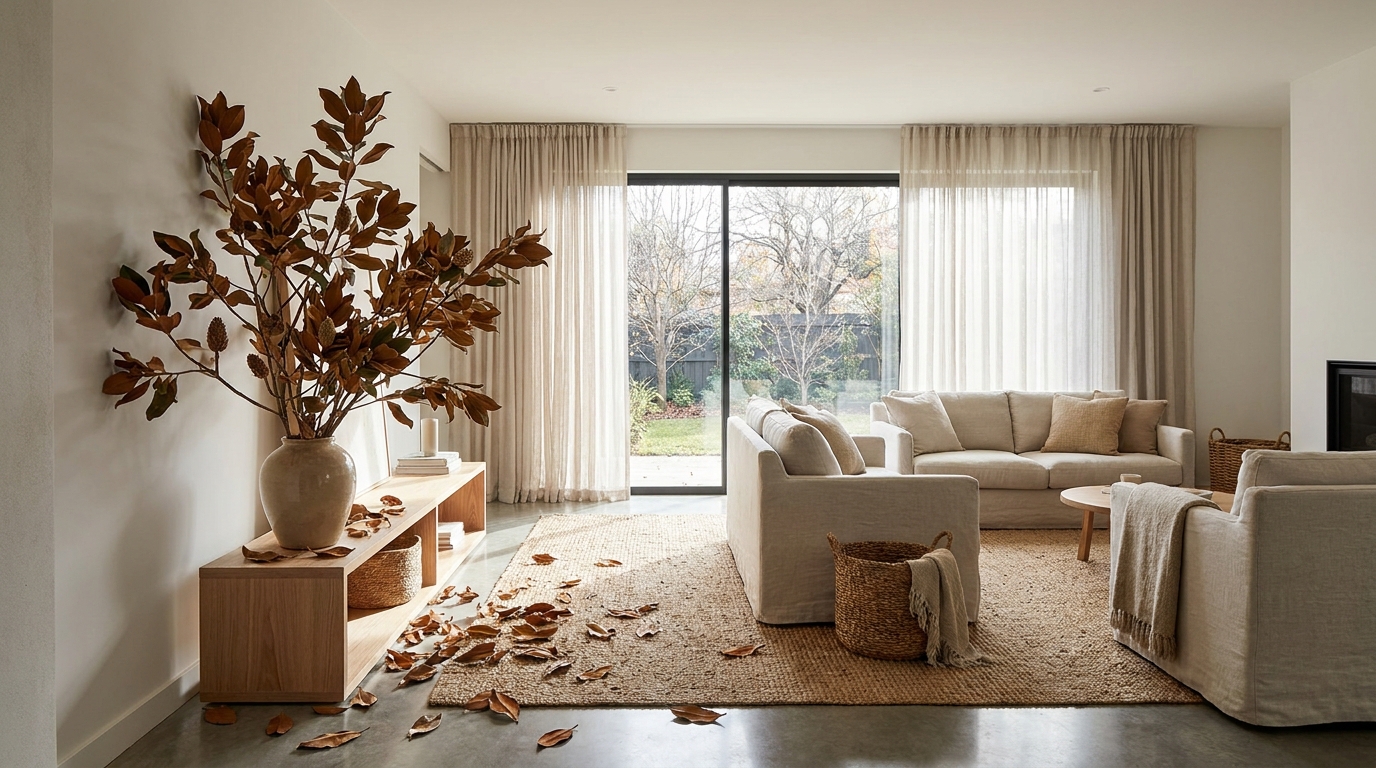
Southern magnolias often drop their oldest interior leaves in October while the outer crown stays green, and that pile is usually normal. Brown new growth, scorched margins, or dead limbs are the signs that need a closer look.
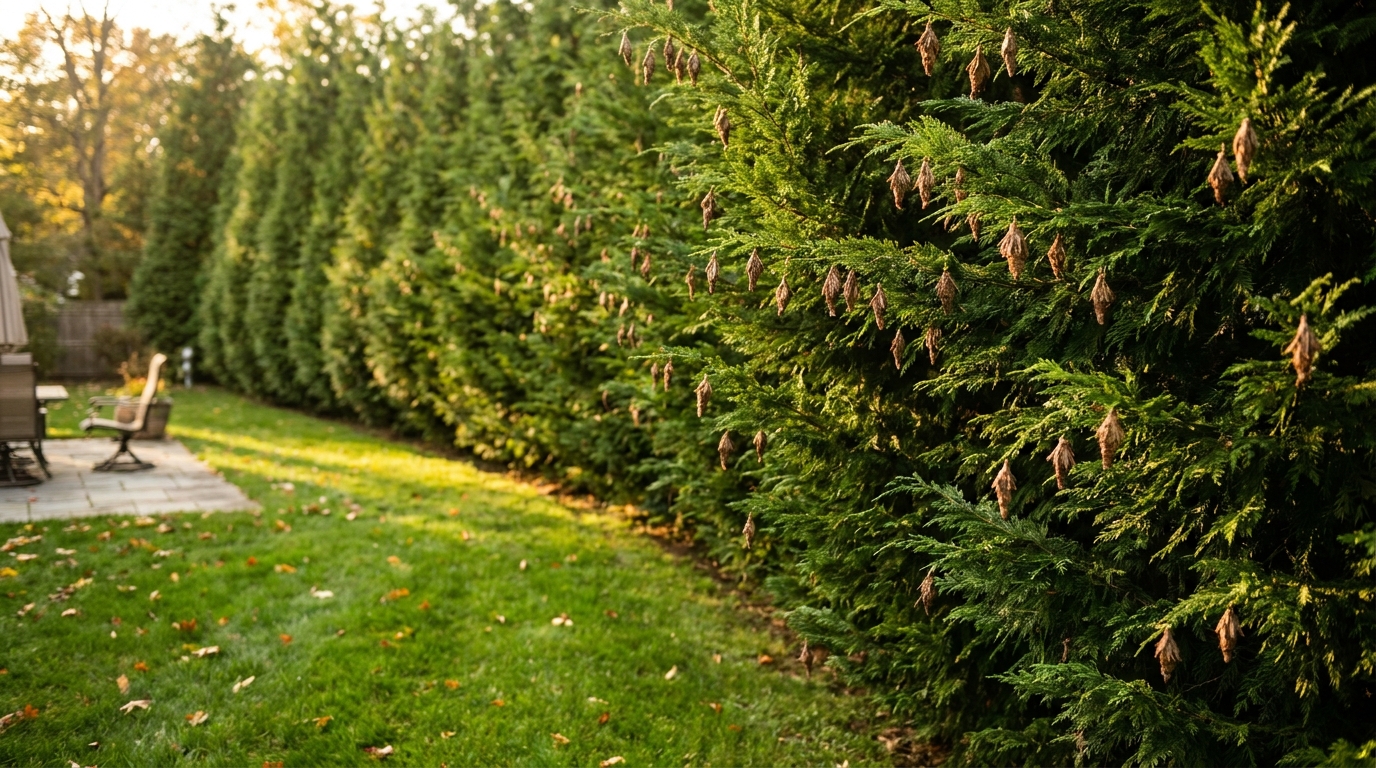
Brown bags on Leyland cypress in October are evergreen bagworms full of eggs, not seed cones. Cut them off through early spring, since a spray usually misses and stripped wood will not grow new needles.
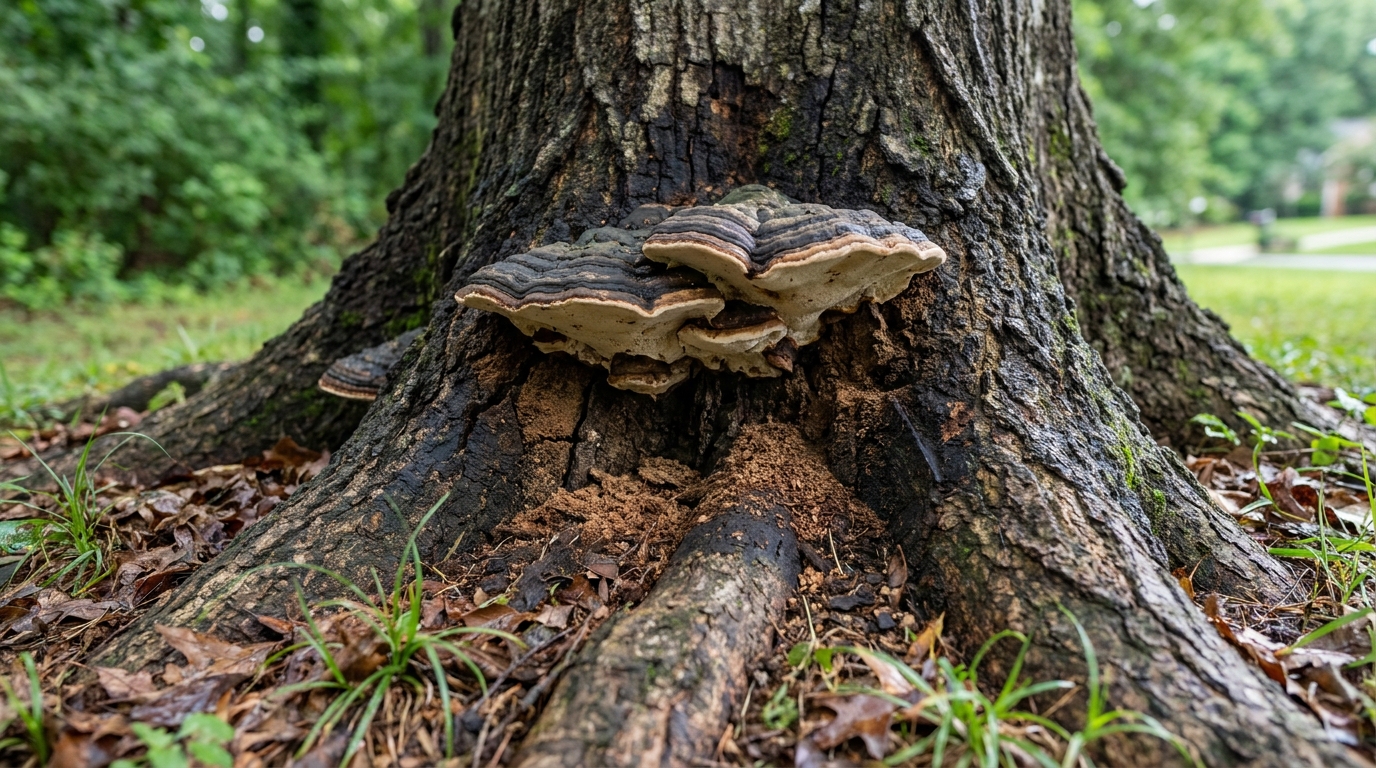
Cracked trunks, codominant stems, root upheaval, and shelf fungi are the warning signs a Waxhaw tree may be hazardous. Learn when to get a professional assessment.
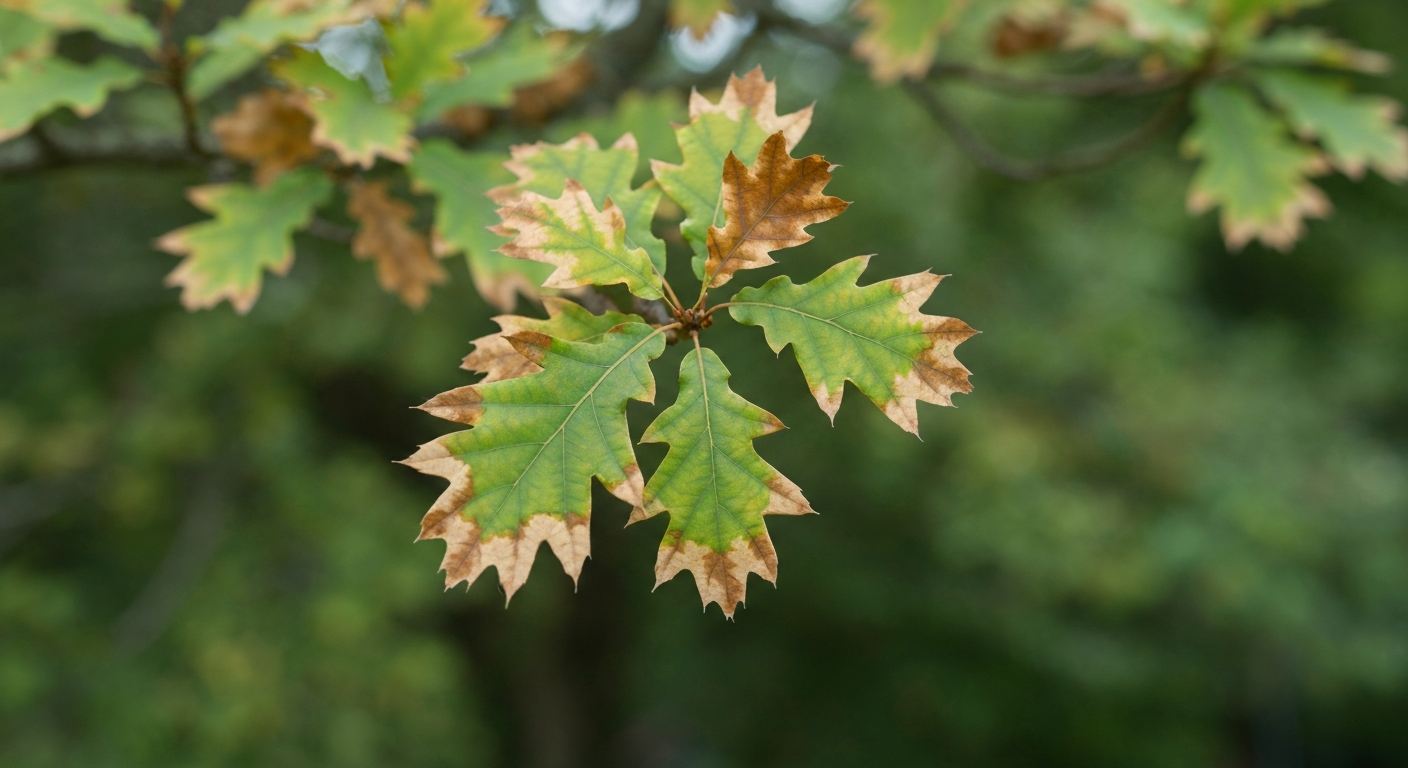
In Union County, late-summer oak browning is not always drought. Bacterial leaf scorch mimics thirst but is a fatal, insect-spread disease. Here is how to tell them apart, and what care actually helps.
By Clarks Tree Care Team
We value your privacy
Clark's Tree Care uses Google Analytics 4 to understand aggregate site usage so we can serve homeowners better. No advertising or cross-site tracking cookies are used. You can opt out at any time by clicking “Reject,” or learn more in our
Cookie Policy.