Holiday lights on trees should come off when the season ends, before spring growth. A wire or tie left around a trunk can cut into the bark as the wood grows and can kill a branch or the tree.
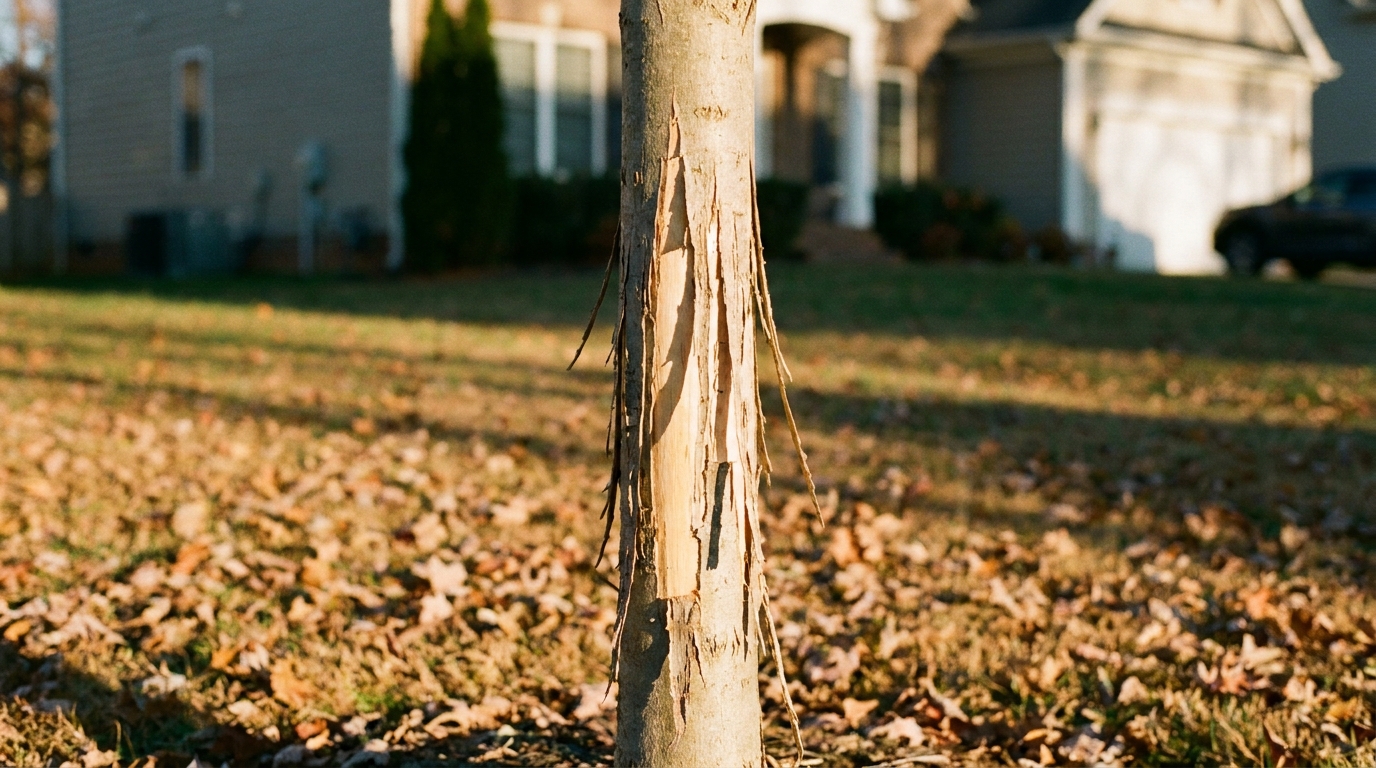
Shredded bark on a small trunk in November is often a buck rub on young trees, not a canker or a beetle. Posts or a wire cage protect the bark better than a spray, and a one-sided scrape is not a reason to remove the tree.
Bald cypress needle drop turns the whole crown copper in November, then the tree stands bare until new needles grow in spring. That color is normal and is not a reason to remove the tree.
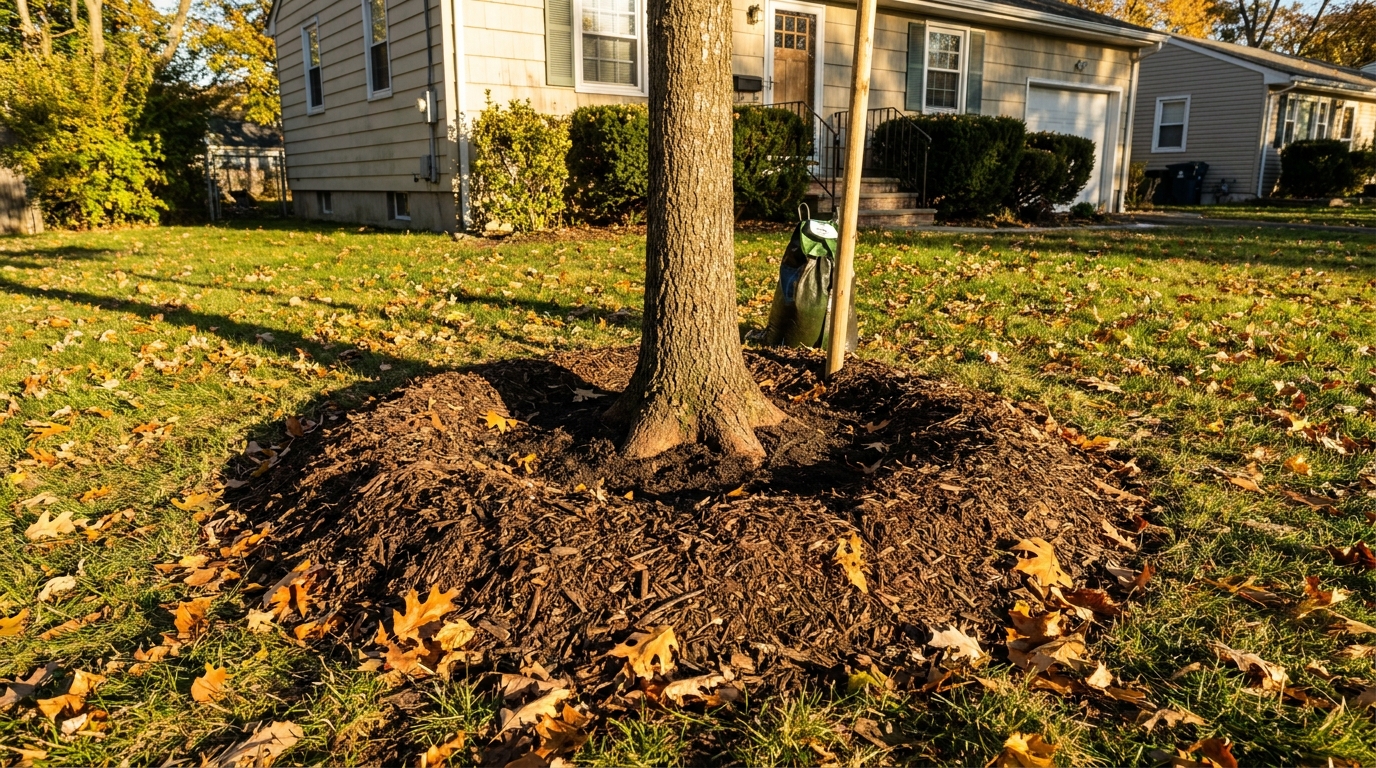
A tree planted this fall still needs water when the root ball is dry and the ground is not frozen. Check weekly in dry weather, water only when temperatures are above freezing, and wait until spring to fertilize.
A heavy acorn crop is a mast year, not a sign the oak is dying. White oaks ripen nuts in one season and red oaks take two, so two sound trees can tell different stories in the same October.
Pine needle drop in fall is usually normal. The oldest inner needles turn yellow or brown while this year's tips stay green, and a thick carpet with green tips is a raking job rather than a reason to remove the tree.
October is a sound month for most hardy shade trees in Union County, and it is not the only month. Fall, winter, and early spring sit in the same cooler planting window.
Tree roots usually go around a sound foundation instead of breaking it. They widen cracks that are already there, and cutting a large root beside the house can make the tree unsafe.
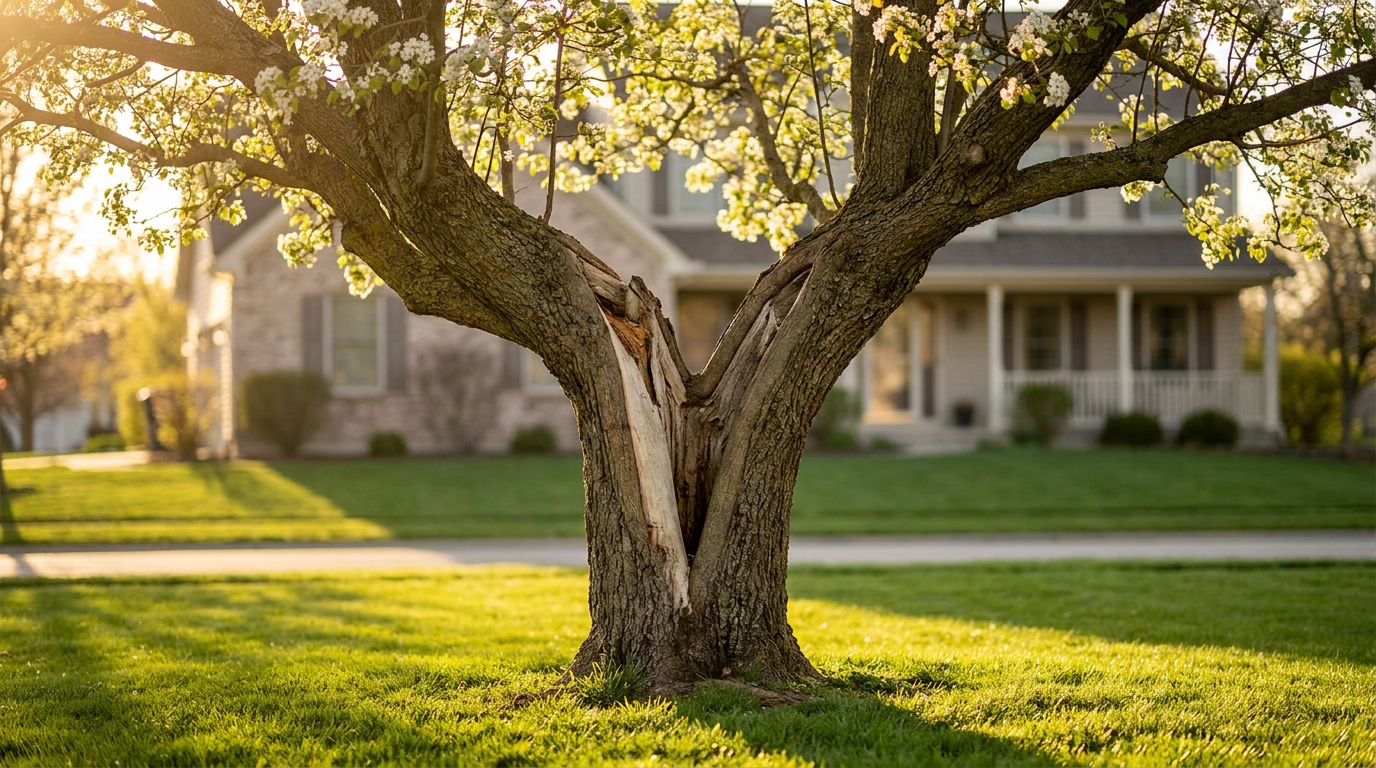
A Bradford pear usually fails at the trunk because tight upright crotches hold bark instead of a solid wood joint, so a mild or moderate storm can tear a main stem. Removal is the safer call when a crack already sits over a roof, driveway, or play area.
By Clarks Tree Care Team
We value your privacy
Clark's Tree Care uses Google Analytics 4 to understand aggregate site usage so we can serve homeowners better. No advertising or cross-site tracking cookies are used. You can opt out at any time by clicking “Reject,” or learn more in our
Cookie Policy.